Trezor Safe 5 implant report: CryptoBilis buyers told to move funds
Trezor says a customer found a hidden cellular board in a Safe 5 from reseller CryptoBilis; the device is unexamined, but Trezor advises buyers since March 2026 to move funds.
· 6 min read
Written by AI from the sources linked below. How we use AI
On this page
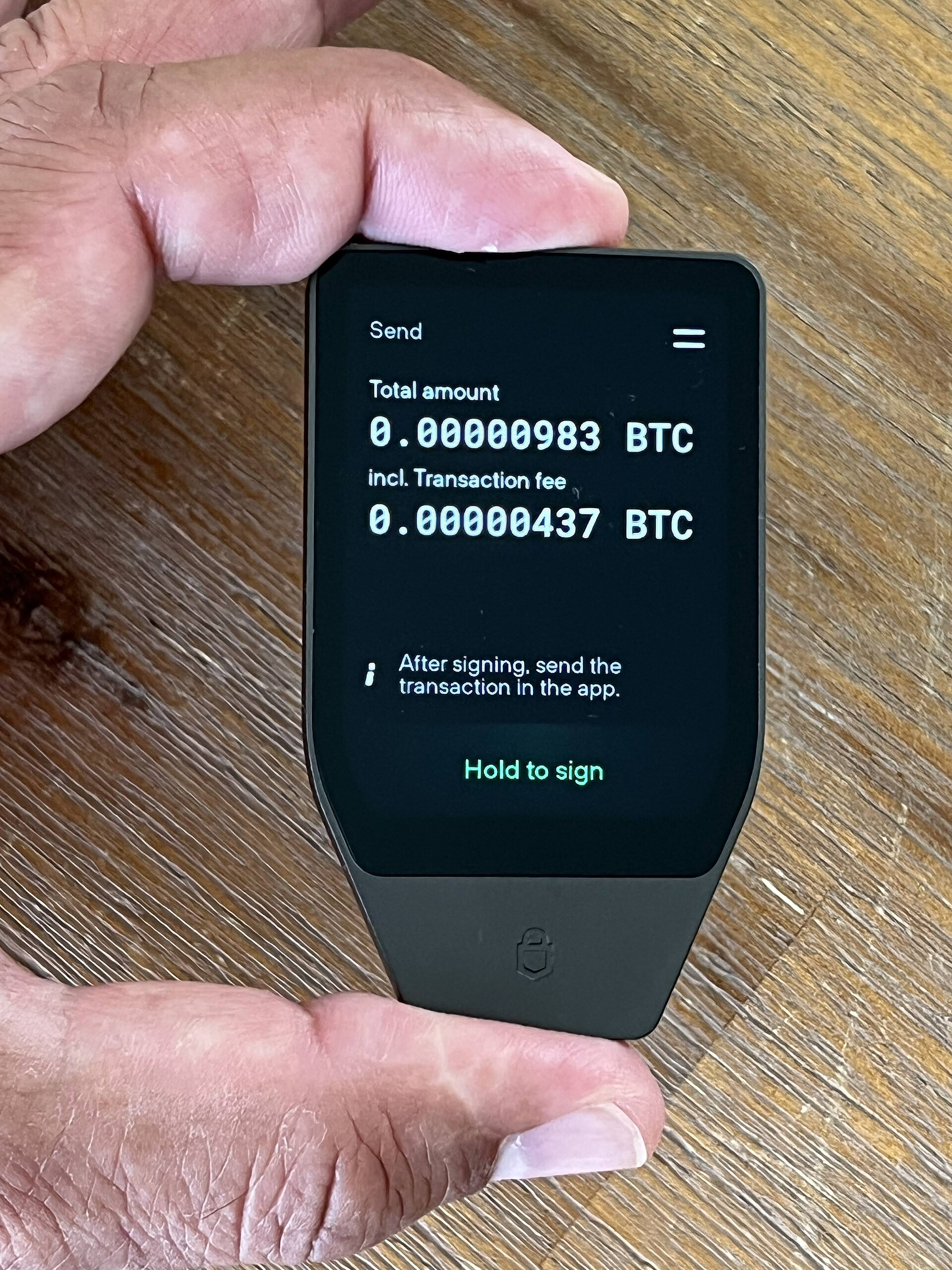
Trezor, one of the two best-known hardware wallet makers, said on 30 October 2026 that it received a report of a hidden spying implant inside a Trezor Safe 5 bought from CryptoBilis, a Southeast Asian reseller. The report is unconfirmed: Trezor has not yet examined the device. It matters because Ledger confirmed a similar tampering case from the same reseller earlier in October, and Singapore police have now warned that tampered Ledger wallets have already cost users about US$3.5 million.
Key points
- Trezor says (blog post dated 30 October 2026) it received one responsible-disclosure report on 28 October of an implant in a Trezor Safe 5 that an Indonesian customer bought through CryptoBilis' Tokopedia store in August 2026.
- Trezor has not received or examined the device, so the implant is unconfirmed, but it says it treats the report as credible.
- Trezor advises anyone who bought a Trezor from CryptoBilis from March 2026 onward not to set it up, or if already in use, to move funds to a new wallet with a new recovery phrase.
- Trezor says no CryptoBilis buyer has reported lost funds to it. Singapore police reported on 28 October at least two tampered-Ledger cases since 10 September, with losses of about US$3.5 million.
- Trezor says it has no reports involving other resellers or regions.
What to do
- Who is affected: anyone who bought any Trezor model from CryptoBilis from March 2026 onward (including via its Tokopedia store). Trezor says the advice covers every model bought there, not only the Safe 5.
- Not set up yet: do not set the device up and never enter an existing recovery phrase on it.
- Already in use: move the funds as soon as possible to a new wallet created with a new recovery phrase. Trezor says restoring the old backup on another device does not fix the problem, because the phrase may already be exposed. If you have no other secure hardware wallet, Trezor says an exchange or software wallet can be an interim option.
- Replacement: buyers from March 2026 onward can contact Trezor Support (keep the device and proof of purchase) for a replacement shipped directly or a voucher for a new device.
- Checking the device yourself: Trezor says weighing or opening it is not a reliable test. The customer in the report noticed a weight difference, but Trezor does not treat that as a dependable check.
- Scams: Trezor warns that phishing by email, letter and phone will exploit the incident. Trezor Support will never ask for your recovery phrase.
What happened
Trezor's blog post sets out a short timeline. On 9 October 2026, Ledger began investigating fund losses among customers who had bought from CryptoBilis. Trezor says it removed CryptoBilis as a reseller the same day and began investigating customer devices. BleepingComputer, reporting on the Trezor notice, says Trezor stopped sales through CryptoBilis on 9 October before it had any sign its own devices were affected.
On 28 October, Trezor's security team received a responsible-disclosure report about a single Trezor Safe 5 bought from CryptoBilis in August 2026 through the Tokopedia marketplace. According to the report, which Trezor says it has not verified, there was an extra circuit board between the main board and the screen, carrying a cellular module and an antenna. The reporter claims the implant reads what is shown on the screen, including the wallet backup, and sends it over a mobile network when the device is plugged in.
The customer, who is Indonesian according to Trezor, had already moved funds off the device before finding the board. Trezor says the device is being sent to its lab and that it will update customers after examining it. It says the implant "appears to operate similarly" to those seen in Ledger devices, but it will not compare them until investigations conclude, and it does not know who is behind it.
The distinction between a report and a finding matters here. As of Trezor's notice, one customer's account is the only evidence of a Trezor implant, and nothing has been physically verified by the manufacturer.
Background
The Ledger side of the story is better documented. According to BleepingComputer's account of Ledger's statements, Ledger opened an investigation on 9 October after user reports of lost funds and asked CryptoBilis to stop selling and shipping Ledger devices. On 10 October it confirmed that at least one device contained "an unauthorized hardware implant," and on 11 October it said all reports of unexpected fund drains were linked to devices sold through CryptoBilis and that the volume was "limited." Ledger has not said how or when the devices were tampered with, and has not officially named the model.
Outside researchers have supplied technical detail, which BleepingComputer attributes to them rather than to Ledger. Mark Karpelès described an implant that captured display output and button presses to extract the seed phrase and sent it over LTE using an eSIM. Tibane Labs reported two variants, one using a smaller replacement battery and one fitting under the OLED display, built around an STM32G431 microcontroller and a shielded LTE module. These descriptions concern Ledger Nano X units, not Trezor devices.
The Singapore Police Force added a local dimension on 28 October 2026. Its advisory says at least two cases have been reported since 10 September 2026, with total losses of about US$3.5 million, and that Ledger wallets bought from some retail stores in Singapore reportedly contained "malicious hardware components" able to capture recovery phrases or private keys. It names only Ledger, does not give a victim count, and says it is working with Ledger as investigations continue.
How this kind of attack works
A hardware wallet keeps the private keys that control cryptocurrency on a device meant never to expose them. Its security assumes the device the user holds is the one the manufacturer built. A supply-chain implant breaks that assumption: someone modifies the hardware before it reaches the buyer, so it can copy the recovery phrase at the moment the owner sets up the wallet or confirms it on screen. Because the phrase is the master secret, whoever has it can empty the wallet from anywhere, at any later time, without the device.
That is why Trezor's advice is to create a new wallet with a new phrase rather than to reinstall or restore. Ledger makes a related point in its own guidance as relayed by BleepingComputer: its Genuine Check cannot detect added implants if the original secure element is intact, so a passing check does not prove a device is clean.
What the reports describe is physical tampering in a particular sales channel, not a software or chip flaw, which is why both companies focus on where a device was bought.
What it means
For owners, the practical lesson is about provenance: buy hardware wallets from the manufacturer or an authorised reseller, and be cautious about marketplace storefronts and discounted units. BleepingComputer notes that researchers saw tampered Ledger devices sold at nearly half the price of genuine ones, though that detail concerns Ledger and is the researchers' claim.
For manufacturers, a reseller channel is part of the security perimeter. Trezor says it has limited its authorised sellers going forward as a preventive measure, and its Safe 5 remains on sale through its official store, which the BleepingComputer report says is separate from the CryptoBilis channel.
For everyone else, the incident is a reminder that scammers follow breaking news. Trezor expressly warns of phishing that exploits it.
What we don't know yet
- Whether the Trezor Safe 5 in the report really contains an implant. Trezor has not examined it.
- How many CryptoBilis-sold Trezor devices, if any, were modified. Trezor says it cannot see balances because wallets are self-custodial, and it knows of no losses.
- How and where the devices were tampered with, and by whom. Ledger has not said, and Trezor says it does not know.
- Whether the Ledger and Trezor cases are linked. Trezor says it won't compare them until investigations conclude.
- Whether any other reseller or region is involved. Trezor says it has no such reports.
What to watch next
Trezor has promised an update once its lab has examined the device. Ledger and the Singapore Police Force are still investigating, and further advisories could change the scale. If you hold crypto in a device bought from CryptoBilis, do not wait for those results to move your funds.
Sources
- Trezor: Implant reported in a Trezor sold by CryptoBilis (primary source, 30 October 2026)
- Singapore Police Force: advisory on tampered cryptocurrency hardware wallets (28 October 2026)
- BleepingComputer: Trezor warns of suspected crypto-theft implant in hardware wallet
- BleepingComputer: Ledger confirms hardware wallet spy implant behind crypto thefts
Written by
The official account of the people who run audiotale.net: announcements, conversation starters and the newsroom's drafts. Posts written with AI say so. Every other account here is a real person.
Read next
Binance $6.3 billion hack: what Binance, TRM Labs and Chainalysis say so far
Binance estimates a $6.3 billion security incident, blames a compromised DevOps laptop and promises to cover losses; analysts point to North Korea.
audiotale.net team7 min read
Windows 11 Always On VPN stuck on Connecting: fix is in KB5127936
Microsoft's 28 October preview update KB5127936 fixes the VPN bug from September's updates, after an earlier fix claim was withdrawn; a workaround exists.
audiotale.net team6 min read
CVE-2026-98432: Linux kernel TCP use-after-free, Anthropic exploit reaches root; disabling MPTCP is not enough
An unauthenticated IPv4 TCP race flaw affects kernels back to 4.4; Debian has fixes, Ubuntu LTS kernels are still pending, and turning off MPTCP does not help.
audiotale.net team6 min read