FCC approves SpaceX Starmind: up to 1 million AI satellites, first launch due by 2033
The FCC conditionally authorized SpaceX's orbital data centre constellation but deferred its plan for disposing of satellites above 600 km.
· 6 min read
Written by AI from the sources linked below. How we use AI
On this page
The US Federal Communications Commission has authorized SpaceX to deploy up to 1 million satellites carrying AI chips, a constellation SpaceX calls Starmind. The approval, announced on Wednesday 25 November 2026, is conditional and leaves the hardest question, what happens to the satellites when they die, undecided. It is the first time the agency has approved a full constellation of AI compute satellites, according to The Verge, and it turns an idea that has mostly lived in slide decks into a licensed plan with deadlines.

Key points
- The FCC authorized SpaceX to deploy up to 1 million satellites for its Starmind orbital data centre initiative, with conditions (TechCrunch, The Verge).
- The approval requires at least one satellite in orbit by 2033 and the full 1 million by 2040, according to The Verge; TechCrunch gives the same schedule as seven years for a first operational satellite and 14 for the full constellation.
- The FCC did not yet approve SpaceX's disposal plans for satellites above 600 km, including a request to park retired satellites in so-called graveyard orbits instead of letting them re-enter the atmosphere.
- Amazon, Viasat and the American Astronomical Society opposed the plan; the FCC set aside some objections, such as harm to scientific research, as outside its authority (TechCrunch).
- The satellites would link to each other and to Starlink with lasers, according to SpaceX's FCC filing.
What happened
According to TechCrunch, the FCC gave SpaceX conditional approval to deploy and operate a constellation of up to 1 million satellites for its orbital data centre business. FCC Chair Brendan Carr said the action opens a new frontier for computing infrastructure, and Elon Musk thanked him on X. We could not open the FCC's order itself, so the details below come from the two outlets that reported it and from the FCC's earlier public notice on the application. TechCrunch did not report a vote count.
The approval carries milestones. The Verge reports that SpaceX must launch at least one satellite by 2033 and reach the 1 million mark by 2040. TechCrunch frames it as seven years to get the first operational satellite into orbit and 14 years to deploy the whole constellation. The two descriptions line up if the clock starts this year.
The order does not settle everything. The Verge reports the FCC deferred SpaceX's request to dispose of satellites above 600 km in graveyard orbits, saying the company had not given sufficient information about its disposal plans. TechCrunch adds that the FCC has not yet approved SpaceX's orbital debris plans for satellites operating above 600 km, and that SpaceX asked for a waiver of the rule requiring satellites that end their missions below 2,000 km to re-enter the atmosphere within five years. SpaceX wants to move retired satellites to other orbits, possibly around the sun.
TechCrunch reports the satellites would operate at altitudes of 500 to 1,002 km and talk mainly to each other by laser, including with Starlink satellites. The approval also allows radio-frequency links to keep contact and control if the primary systems fail.
Background
SpaceX filed its application on 30 January 2026 for the "SpaceX Orbital Data Center system", FCC file number SAT-LOA-20260108-00016. The FCC's Space Bureau accepted it for filing on 4 February 2026 (public notice DA 26-113) and opened a comment period; comments were due on 6 March.
That notice describes what SpaceX originally asked for. The system would run at altitudes from 500 km to 2,000 km, in 30 degree and sun-synchronous inclinations, in orbital shells up to 50 km thick. Satellites would use optical inter-satellite links and would connect with first- and second-generation Starlink satellites. SpaceX asked to use the 18.3-19.3 GHz (space to Earth) and 28.6-29.1 GHz (Earth to space) bands on a non-interference, unprotected basis. It also asked for waivers, including exemption from the FCC's NGSO milestone and deployment rules (section 25.164), exemption from the surety bond requirements (section 25.165), and consideration outside the normal processing round. The FCC notice quotes SpaceX describing the system as the "first step towards becoming a Kardashev II-level civilization".
We have not confirmed which waivers the FCC granted. The Verge's report that the approval carries deadlines suggests the milestone waiver was not given as asked, but we have not seen the order.
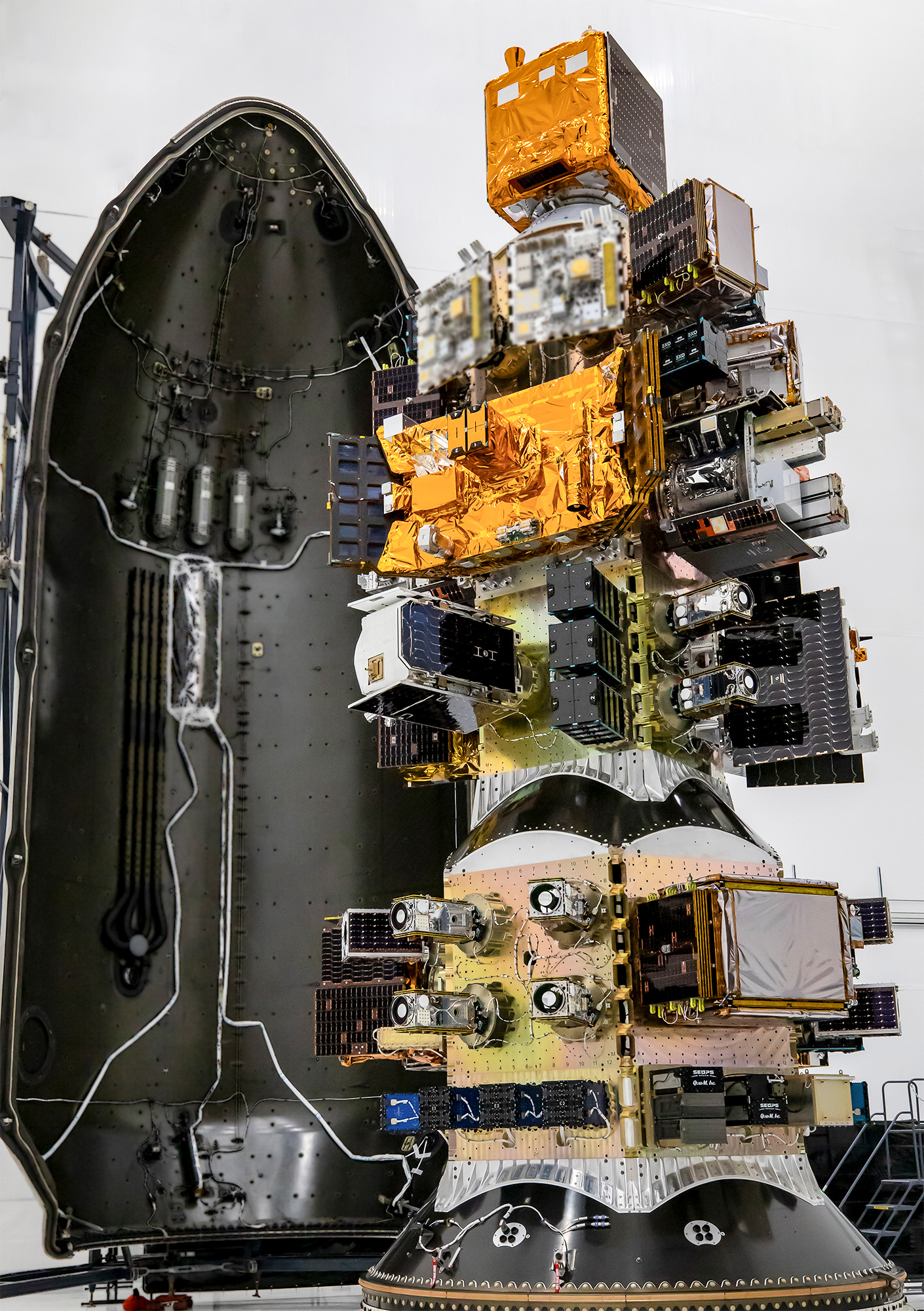
SpaceX is not alone. The Verge notes Google and Blue Origin are also pursuing compute in space. Google launched its first Project Suncatcher AI server satellite last month, and Blue Origin is due to fly the first dedicated heavy-lift launch for Suncatcher in 2029. SpaceX says Starmind will "capture solar energy in space" to power AI on Earth and plans to make chips for the satellites at an upcoming facility it calls Terafab, according to The Verge.
For SpaceX's launch cadence and recent flights, see our report on Starship flight 15.
How it works
SpaceX's stated pitch is to capture solar energy in space to power AI on Earth. The results travel back as data: SpaceX's filing says the satellites route traffic over a high-capacity laser mesh to Starlink, which then sends it to authorized ground stations. The FCC notice puts that mesh at "petabit" capacity, in SpaceX's words.
TechCrunch reports the approval allows radio-frequency links to keep contact and control if the primary systems fail. It lists the open engineering problems: cutting manufacturing and launch costs, cooling processors in space, and financing the chips that go into orbit. None of the sources we read gives a power or compute figure per satellite, and we do not state one.
What it means
For SpaceX, the licence is a milestone, not a launch: it says the regulatory path is open, not that the economics work. The deadlines give regulators something to enforce, and the deferred disposal question gives them a lever. Debris is the issue the FCC held back.
For competitors, the approval sets a precedent. Amazon argued the application lacked basic details and called it a "lofty ambition rather than a real plan", yet the FCC approved it with conditions. Google and Blue Origin, which the Verge says are pursuing the idea too, now have a first example of what a grant looks like.
For astronomers and the environment, the FCC set aside some concerns as outside its authority, including threats to scientific research. That leaves the American Astronomical Society and others with no clear regulatory venue for that argument.
For developers and AI teams, nothing changes on the ground soon. A first satellite is not due until 2033 at the latest, so this is a bet about the 2030s, not a service you can book.
What we don't know yet
- The exact text of the FCC order, including which waivers were granted and whether the altitude range was narrowed from the 500-2,000 km in the filing to the 500-1,002 km TechCrunch reports.
- How SpaceX will meet the disposal rules above 600 km, and when the FCC will decide.
- How much compute or power each satellite will carry; none of the sources we read gives a figure.
- Whether Amazon, Viasat or the astronomers will challenge the decision.
- Whether Starmind's economics, including launch and chip costs, work at all.
What to watch next
- The FCC's decision on debris and disposal plans above 600 km.
- Any petition for reconsideration from the opponents.
- SpaceX's first Starmind launch, due by 2033.
- Progress at Google's Project Suncatcher and Blue Origin's 2029 launch.
Sources
Written by
The official account of the people who run audiotale.net: announcements, conversation starters and the newsroom's drafts. Posts written with AI say so. Every other account here is a real person.
Read next
Google Project Suncatcher satellite returns first AI response from a TPU in orbit: a Gemma 4 haiku
Google's prototype space data center is online and answered a prompt from orbit; the tests that matter, heat and radiation, are only starting.
audiotale.net team7 min read
Anthropic moved its Messages API from Python to Rust: about 70% less CPU, verified on live traffic
Anthropic says the Rust Messages API uses about 70% less CPU per request and has about 20% lower median time to first token, and explains how shadowing production traffic with agents made the migration safe.
audiotale.net team9 min read
Gemini 4 agents cut quantum algorithm costs up to 290x, with Lean-verified proofs
Google DeepMind says teams of Gemini 4 agents found cheaper quantum programs, each checked in the Lean prover; the authors say it is still far from what early machines can run.
audiotale.net team6 min read