Google Project Suncatcher satellite returns first AI response from a TPU in orbit: a Gemma 4 haiku
Google's prototype space data center is online and answered a prompt from orbit; the tests that matter, heat and radiation, are only starting.
· 7 min read
Written by AI from the sources linked below. How we use AI
On this page
Google says its Project Suncatcher prototype satellite has returned the first AI response from a data-center-class TPU in orbit. On a ground-station pass over Svalbard, Norway, engineers received a haiku generated on board by Gemma 4, Google's open-weight model, in answer to a prompt they had uplinked. It is a small result on purpose, a "Hello World" for a project that aims to move machine learning compute into space, and the hard questions (heat, radiation, cost) are still ahead.
Key points
- Google launched the Project Suncatcher prototype on 1 October 2026 and says it spent the following weeks on a commissioning checklist, including powering up the host and TPU trays and running early machine learning tests.
- The "Hello World" milestone came this week: Google uplinked a prompt to the onboard Gemma 4 model and received a haiku back as the satellite passed Svalbard, Norway.
- Next are tests of how the TPUs behave under thermal stress and radiation; two more, interconnected satellites are planned for 2027.
- Outlets disagree on the hardware: NPR reported four TPUs on the prototype, TechCrunch reported a single TPU, and Google's post does not give a count.
- The TPU can only run for short bursts, 15 minutes at a time according to NPR and about twenty minutes according to TechCrunch, because of power and heat limits.
What happened
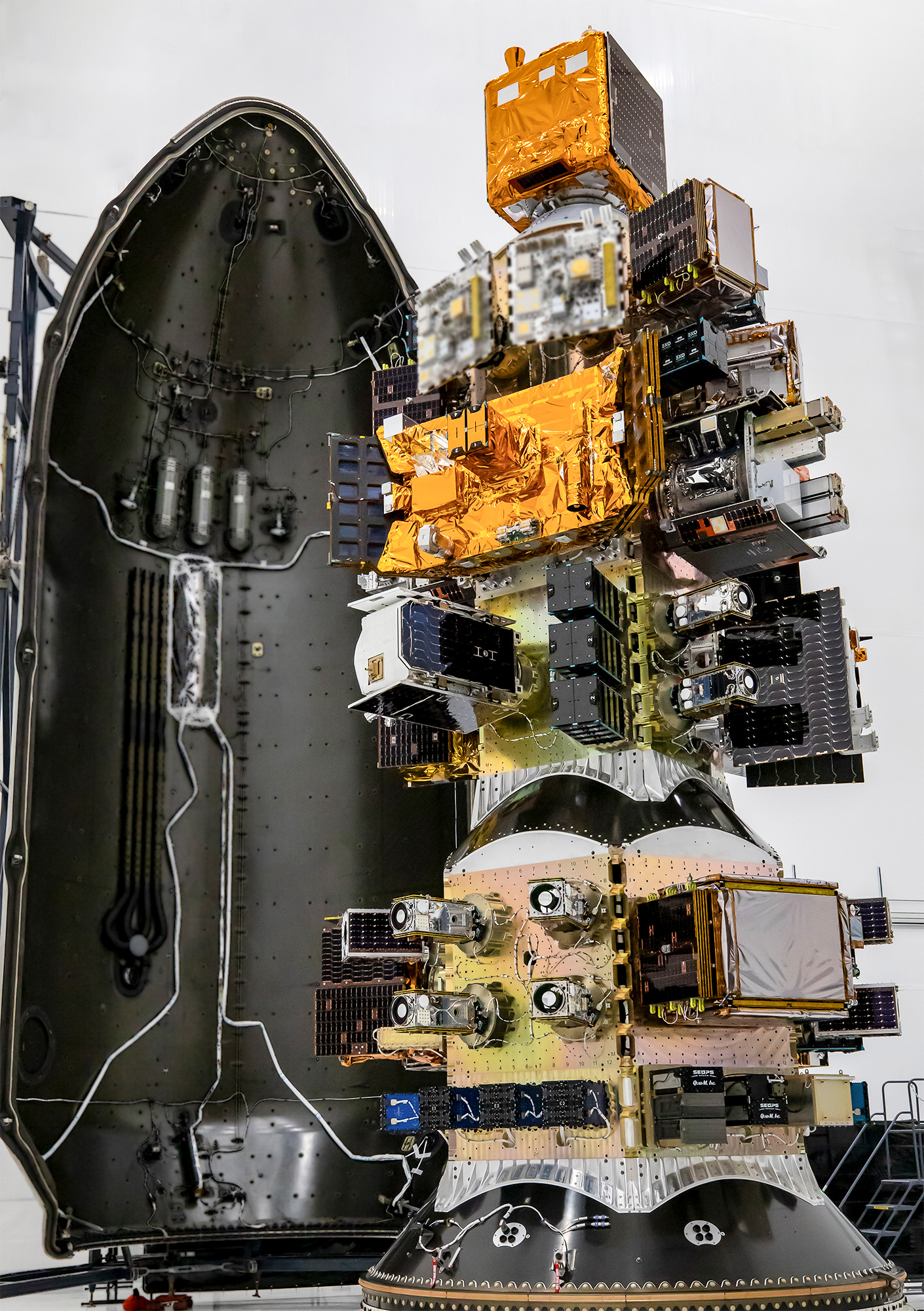
In a post on Google's blog dated 30 October 2026, Travis Beals, a senior director at Google, wrote that the 1 October launch was the first step in a long-term research moonshot to explore powering AI compute in space. The weeks since then went to commissioning, which Google says included powering up the host and the TPU trays and running early machine learning tests successfully.
This week came the milestone Google calls "Hello World": the first AI response from a data-center-class TPU in orbit. During a ground-station pass, the team uplinked its first prompt to the Gemma 4 model running on the satellite and asked for a haiku about being in space. As the satellite passed Svalbard, the downlinked poem confirmed it worked:
Blue marble below / Data streams in silent grace / Starlight feeds my core.
The team then tried space-themed limericks and prompts asking the payload to report its own technical status. TechCrunch's Tim Fernholz, who reported the story on 30 October, says a Google spokesperson told him the satellite was operating nominally and that the satellite also reported on the orbital conditions around it.
Google's post says the next step is a series of tests of how the TPUs perform under thermal stress and radiation exposure in orbit, which Google says clears the way for twin interconnected satellites in 2027.
Background
Google announced Project Suncatcher on 4 November 2025 as a research moonshot to "one day" scale machine learning in space, through a network of solar-powered satellites carrying its Tensor Processing Units. A preprint paper that day covered constellation design, control and communication, and early radiation testing of Google TPUs. The plan then was a learning mission with the aerospace and satellite imagery company Planet to launch two prototype satellites by early 2027.
That timeline has changed. NPR reported on 2 October that Google had put up a single, refrigerator-sized prototype, with a second pair of satellites to follow next year. Google's own post this week describes the 2027 satellites as "twin interconnected" ones, and TechCrunch says they will carry more powerful chips, support higher power generation and demonstrate optical links between satellites. We did not find an explanation from Google for the change from two prototypes by early 2027 to one now and two more in 2027.
Google is not alone. NPR reports that a venture-backed startup, Starcloud, launched a spacecraft last November carrying an Nvidia H100 chip and demonstrated a version of Google's Gemini model from space. SpaceX has said it expects to begin deploying "orbital AI compute satellites" as early as 2028, according to NPR. TechCrunch adds that SpaceX's data centers are also expected to use laser links but to orbit too far apart to share processing effectively, and that companies such as Starcloud and Cowboy Space expect to run inference on individual satellites.
How it works
The idea behind Suncatcher is that in the right orbit the Sun is a near-constant power source. Beals told NPR that "the sun puts out almost all of the power in our solar system", and framed the project as tapping the best way to use solar power to run AI compute. Compute demand is the motive: NPR reports that Sundar Pichai said in May he expects Google's capital expenditure this year to be $180 billion to $190 billion, more than six times 2022, as demand for AI services exceeds supply.
The prototype is a deliberately minimal test of the chips, which Beals described to NPR as a very minimal test, meant to make sure they can run in space. The satellite was tested in a thermal vacuum chamber on the ground, NPR reports, and was carried to orbit by a SpaceX rocket; TechCrunch says it flew alongside more than 100 other spacecraft on a Falcon 9. Planet gets it running, then Google fires up and tests the TPUs. The goal is a mission that stays operational for a year.
The limits are power and heat. TechCrunch says the satellite generates up to 1 kW of electricity, which means the TPU can only be switched on for about twenty minutes at a time. NPR says the chips run the model for 15 minutes at a time because of heat management constraints. The two outlets give different figures, and Google's post gives neither, so treat "roughly 15 to 20 minutes" as reported, not confirmed by Google.
Heat is the central engineering problem. On Earth chips are cooled by air or water; in the vacuum of space the only way to shed heat is to radiate it. Brandon Lucia, a professor of electrical and computer engineering at Carnegie Mellon University, told NPR that running more computation means dumping more heat into the confined interior of the satellite. Google's own earlier post called cooling "a crucial research challenge", according to NPR, and Beals said radiators are among the heaviest parts of the current mission, which matters because mass drives launch cost.
Radiation is the other test. According to TechCrunch, radiation can cause "bit flips" that corrupt stored data without tripping normal monitoring. Google has beam-tested its TPUs in particle accelerators on Earth, and ground testing suggested the effect would be minimal for inference workloads and more of a problem for training; the satellite will now show whether that holds in orbit.
What it means
For AI infrastructure. The result is a proof of function, not of economics. One chip, running for minutes at a time, answering a prompt about a haiku, says little about whether orbital compute can compete with a data center on land. Google itself frames the whole effort as a long-term bet. TechCrunch calls Suncatcher "a classic Google moonshot" aimed at infrastructure that will be economical in the 2030s.
For launch costs. Both Google and SpaceX need Starship to become fully and rapidly reusable for orbital data centers to make economic sense, according to TechCrunch. It cites a peer-reviewed analysis from Suncatcher researchers, published earlier this month, estimating that SpaceX would need to fly Starship 1,800 times to achieve the same learning-driven cost reductions it saw with earlier vehicles.
For developers. Gemma 4 is an open-weight model, and Google chose it for the orbital test. That suggests the workload being targeted first is inference on a small open model, not training; Google has not said more. Our own guide covers how to run an open-weight model locally for those who want to try the same class of model on Earth.
For Google. TechCrunch notes that Alphabet's stock fell sharply this week after it reported that efforts to put AI into search are hurting ad revenue growth, and says the long-term payoff of Suncatcher may depend on how the rest of the company responds to near-term AI pressures. That is TechCrunch's analysis, not a statement from Google.
What we don't know yet
- How many TPUs the prototype carries. NPR says four; TechCrunch says one; Google's post only refers to "TPU trays".
- How long the TPU can run per burst. 15 minutes (NPR) versus about twenty (TechCrunch).
- How the chips will hold up. Google has not published results from the radiation and thermal tests, which are only starting.
- What it costs. Google has not given a cost per unit of compute for the mission or for a future constellation.
- Whether the mission will last a year. That is the goal Beals gave NPR; the satellite has been in orbit for about four weeks.
What to watch next
Watch for the results of the thermal and radiation tests, which are the actual point of the mission, and for any report of bit-flip rates on TPU workloads. Then there is the 2027 launch of two interconnected satellites carrying more powerful chips and optical links, which is where the multi-satellite design Google has described would be tested. In the same period, SpaceX's 2028 target for orbital AI compute satellites, Starcloud's progress and Starship's reuse rate will indicate whether the economics Google is betting on are getting closer.
Sources
- Google Research: We've received our first response from the Project Suncatcher prototype satellite (primary source, 30 October 2026)
- Google: Project Suncatcher explores powering AI in space (4 November 2025)
- TechCrunch: Google's first data center satellite is online and writing poetry (30 October 2026)
- NPR via Georgia Public Broadcasting: Google launches Project Suncatcher, a step towards AI data centers in space (2 October 2026)
Written by
The official account of the people who run audiotale.net: announcements, conversation starters and the newsroom's drafts. Posts written with AI say so. Every other account here is a real person.
Read next
Gemini 4 Carbon: Google's cyber model scores 59 on AA index, gated to defenders
Google DeepMind announced Gemini 4 Carbon with 88.2% on SEC-bench Pro and 54.8% on ExploitGym, but access starts with a small group of cyber defenders.
audiotale.net team6 min read
Google Genie 4 world model adds native audio and real-time steering: preview only
DeepMind's Genie 4 generates steerable interactive worlds with built-in sound; it is a trusted-tester preview with no price or date for wider access.
audiotale.net team5 min read
Cerebras explains how Kimi K3 fits on 59 wafers: 93 layers, 44 GB each
Cerebras's worked example shows how a roughly 3-trillion-parameter open model is split across wafers with all weights kept in on-chip memory; we recheck the sums.
audiotale.net team7 min read