Tesla Cybercab personal orders: $29,990 plus $299/month or it won't drive
Tesla's Cybercab Autonomy Subscription Agreement makes a $299 monthly fee mandatory, lets Tesla restrict the car remotely and bars commercial use.
· 6 min read
Written by AI from the sources linked below. How we use AI
On this page
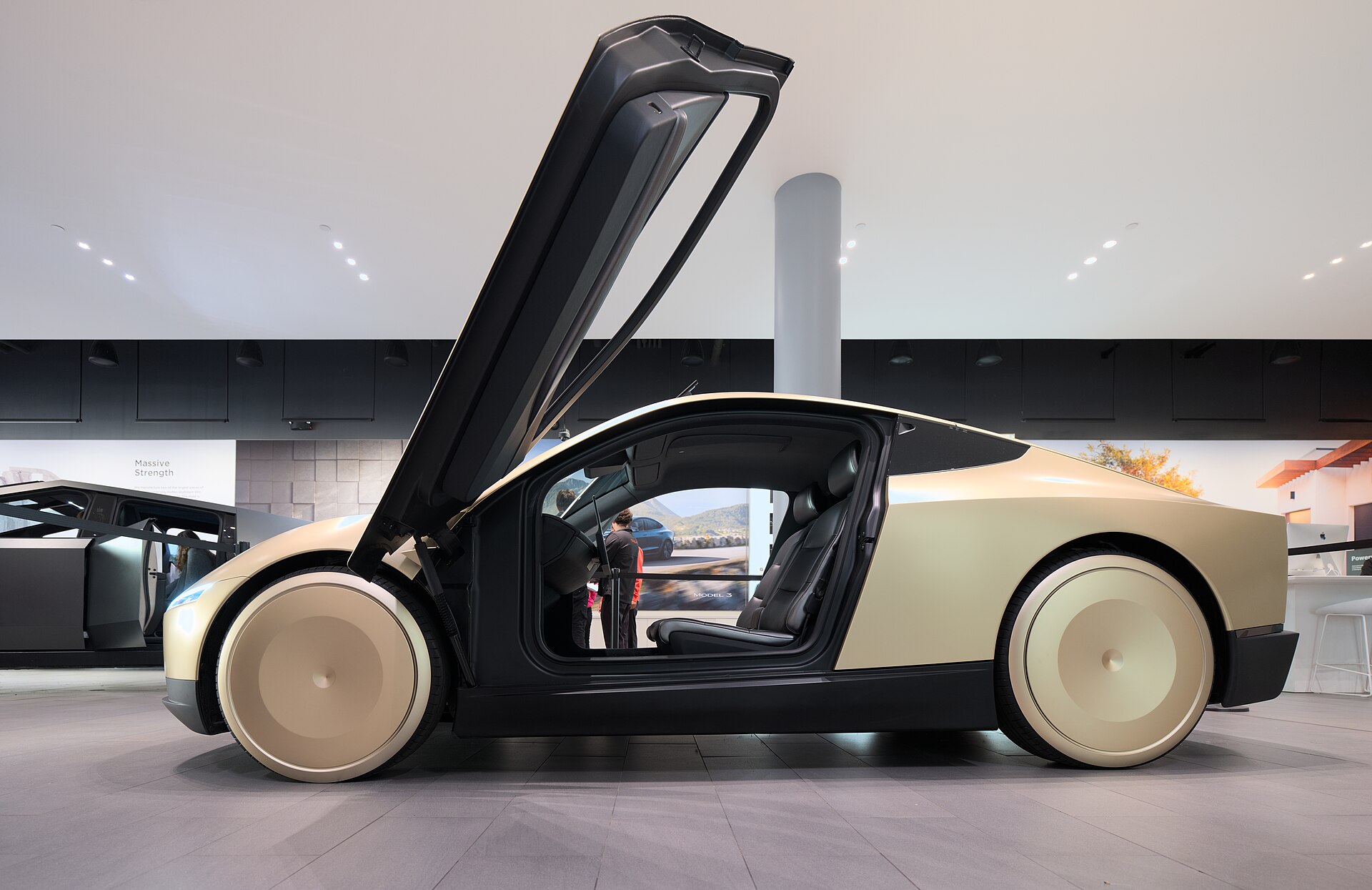
Tesla has begun inviting select customers to order a Cybercab for personal use at $29,990, but the car will not drive without a mandatory $299-a-month "Autonomy Subscription", and the agreement published on 14 November lets Tesla change the price, restrict the car remotely and suspend it for misuse. The cheapest driverless Tesla is therefore closer to $47,000 to $48,000 over five years than to the sticker price, and the terms limit what an owner can do with it. We could not open Tesla's own agreement page from here, so everything below about its wording comes from two outlets that read it, Electrek and The Verge, and is labelled that way.

Key points
- The Cybercab for personal use is listed at $29,990 plus a mandatory $299 per month "Autonomy Subscription", and the car "will not operate" without an active subscription, per Electrek's reading of the agreement (version 20261112).
- Over five years the subscription adds about $17,940, which both outlets put at a total near $47,600 before taxes, charging and insurance; our own arithmetic for 60 paid months is $47,930.
- Tesla can change the price with about a month's notice, can restrict or control the car remotely, and can suspend or cancel for "unauthorized or inappropriate use", according to Electrek and The Verge.
- Personal use only: no Robotaxi network, ride-hailing, delivery or rental unless Tesla authorizes it in writing.
- The Verge reports a $1,000 non-refundable deposit for a December delivery window that is not guaranteed, and an open NHTSA review of how Tesla certified a car without a steering wheel or pedals.
What happened
On 14 November 2026 Tesla's Robotaxi account on X announced that "select customers" could buy a Cybercab "for personal use", with screenshots of the order page and an invitation email, The Verge reports. The email says initial availability is limited, and the car is only available in supported service areas, meaning the cities where Tesla already runs its Robotaxi service.
Electrek reports that the Cybercab Autonomy Subscription Agreement, version 20261112, went up on Tesla's configurator late on a Friday, shortly after the invitations started. The terms it describes:
- Price. $29,990 for the vehicle plus a $299 monthly subscription. Tesla can change the subscription price with one month's notice (The Verge says 30 days). Payments are not prorated when service is suspended, and The Verge adds that cancelling or being suspended gets no partial refund for the month already paid.
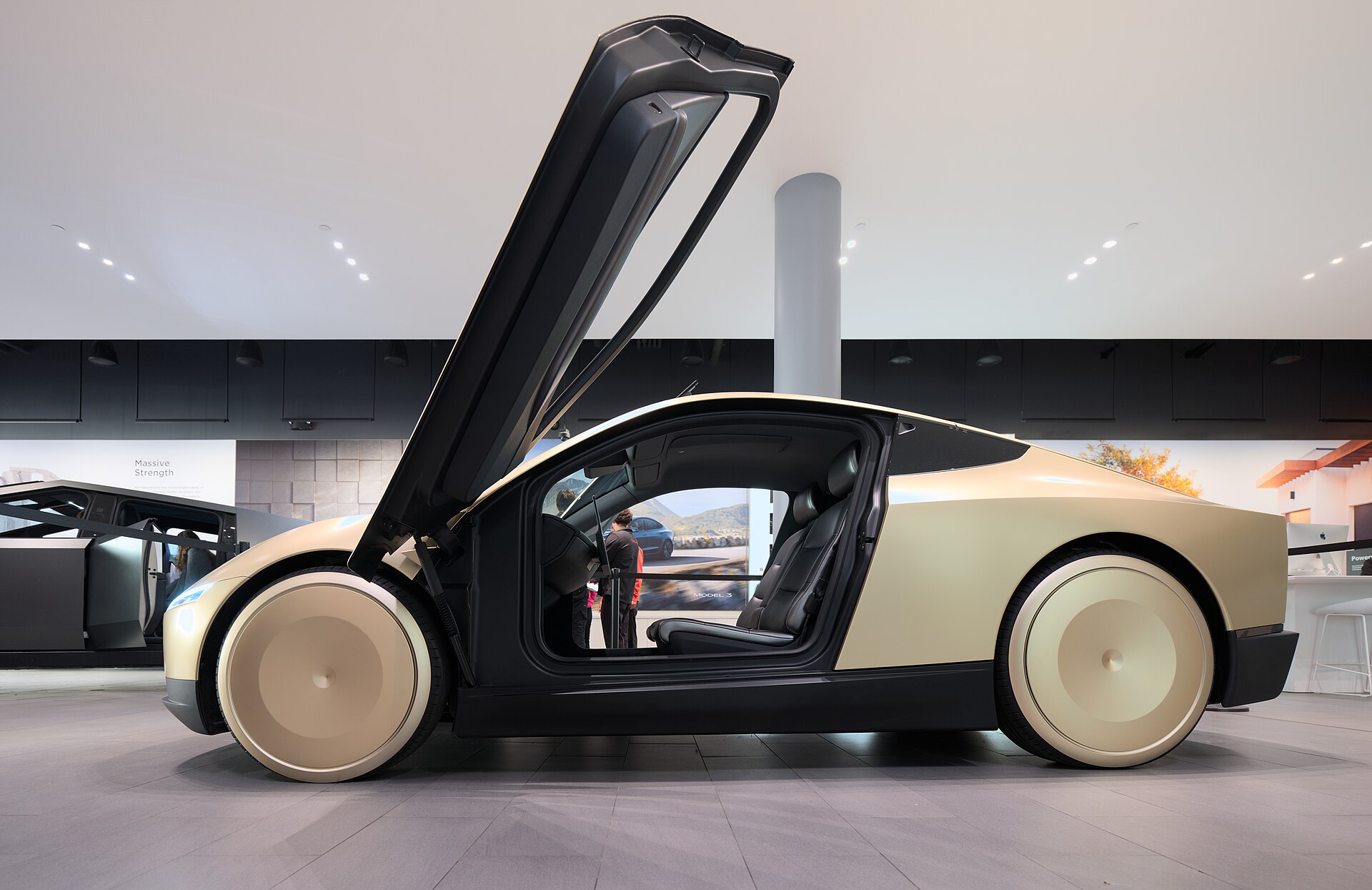
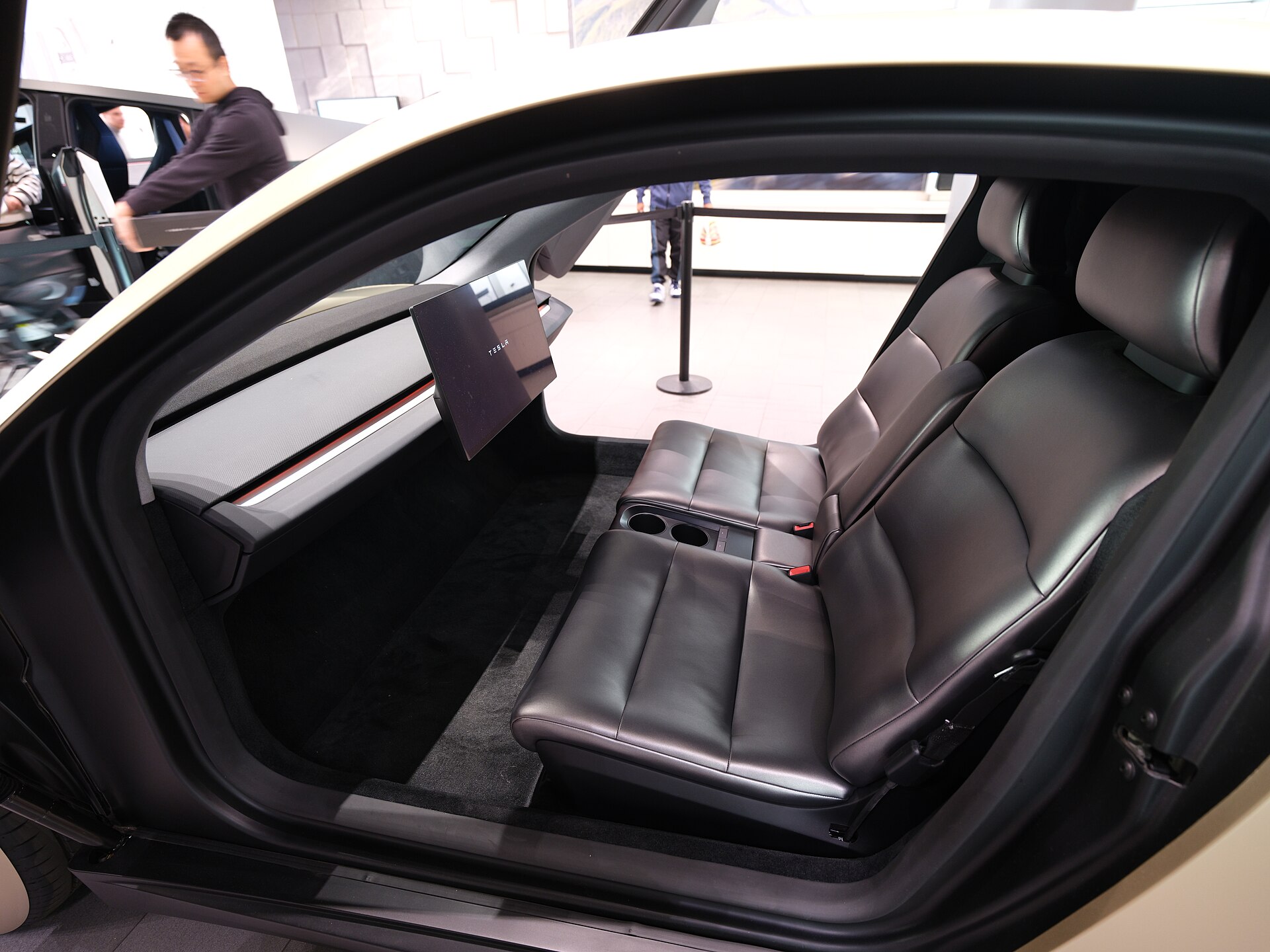
- Operation. The car has no steering wheel or pedals and "will not operate" without an active subscription. It runs only inside Tesla-enabled Robotaxi geofences, which Tesla can expand, reduce or move at any time; driving outside is prohibited and can be blocked technically.
- Suspension. Tesla can suspend or cancel for "unauthorized or inappropriate use". Three or more "strikeouts" for improper or unsafe use trigger a one-week suspension of autonomous driving, during which the car may not operate.
- Remote control. Tesla can remotely locate, restrict or control the car, place it in a "safe state" or end the owner's access, and the agreement gives the owner no remedies beyond those in the terms, per Electrek.
- Data. Tesla collects "Autonomy Data", including images from the cabin camera above the rear-view mirror, kept for 30 days by default, Electrek says.
- Use and modification. Personal use only. No wraps, tint or wheel changes except through Tesla or an authorized provider.
- What the subscription covers. The Verge says Tesla describes it as covering autonomous driving, maintenance and towing, and excluding auto insurance. Electrek says the owner pays for insurance, registration, charging and taxes.
Background
Tesla introduced the Cybercab in 2024 as a driverless two-seater that Elon Musk said would cost under $30,000, and pitched a future in which owners would add their cars to a Robotaxi network and earn money while they slept. The Verge notes that Musk made no mention of a monthly subscription at that event. Tesla already charges $99 a month for its Full Self-Driving (FSD) subscription on conventional cars; cancel that and the car simply returns to manual driving. The Cybercab has no manual mode, so cancelling the subscription means it cannot be driven, which The Verge says means the car "becomes a brick".
Tesla began offering rides in the Cybercab inside its Model Y-powered Robotaxi service in Austin in September, The Verge reports. It cites the crowd-sourced Robotaxi Tracker for 278 Cybercabs in operation, about 40 percent of the fleet. That is a community estimate, not a Tesla figure.
The numbers
Both outlets arrive at roughly $47,600 for five years. The arithmetic depends on how many months are counted: Electrek counts 59 paid months and gets $47,631, while The Verge uses $17,940 for a 60-month period (the sum of $299 × 60). The chart below is our own calculation from the two listed prices, counting twelve paid months a year.
| US$ | |
|---|---|
| Year 1 | 33,578 |
| Year 2 | 37,166 |
| Year 3 | 40,754 |
| Year 4 | 44,342 |
| Year 5 | 47,930 |
Source: Tesla's listed prices as reported by Electrek and The Verge; totals are audiotale.net arithmetic
These totals leave out the $1,000 deposit The Verge mentions (it does not say whether the deposit is credited), insurance, registration, charging and taxes. For comparison, The Verge says the five-year total is more than a new Model 3 or Model Y costs. We did not check those prices and report the comparison as The Verge's.

What it means
For buyers, the Cybercab is closer to a service than a product. The car only moves inside geofences Tesla draws, only while the subscription is paid, and Tesla can restrict it remotely. There is nothing to fall back on if the subscription ends, which is the main difference from owning a car with an optional driver-assistance subscription.
For the economics of Tesla's autonomy plans, the terms close a door that the 2024 pitch left open. Personal-use-only wording means early buyers cannot earn money with the car through Tesla's own network or through Uber or a delivery app unless Tesla authorizes it. The Verge reports that Tesla's AI chief, Ashok Elluswamy, has floated the second quarter of 2027 as a possible target for letting customer cars join the network, so early buyers would pay full price in the meantime.
Musk, replying on X, said he considers $299 a month "too high" and that it should be closer to $115 a month, nearer the $99 FSD price, The Verge reports. Nothing in the agreement as described by either outlet reflects a lower price.
For the industry, the terms show how a vendor can keep control of a vehicle without a human driver: the operator sets the area, the price, the data it keeps and the conditions for use. Whether regulators and insurers accept that split is the open question.
What we don't know yet
- Tesla's own text. We could not open Tesla's agreement page, so we have not verified the clauses against the original. Two outlets agree on the main terms, but the 30-day camera retention, the strikeout rule and the "no remedies" language are reported by Electrek alone.
- Regulation. The Verge reports that NHTSA has opened a formal audit of how Tesla self-certified a vehicle without a steering wheel, pedals or side mirrors, and that Tesla submitted its legal justification in October and asked that the response stay confidential. We have not seen the NHTSA filing; treat this as The Verge's reporting.
- Insurance and liability. Tesla has not said how personal auto insurers will cover a car with no human driver, or how liability is split between owner and Tesla in a crash, according to The Verge.
- How many cars. Tesla has not disclosed how it picks invited buyers or how many cars are for private sale versus its own fleet.
- Delivery. The Verge reports a December window that is not guaranteed.
What to watch next
Watch for Tesla publishing or amending the agreement (it can change the terms, and continued use counts as acceptance, The Verge notes), for any NHTSA decision on the pending review, for insurers' statements, and for Tesla's timeline on customer cars joining the Robotaxi network. If you are considering an order, read the full agreement on Tesla's configurator before paying a deposit.
Sources
- Electrek: Tesla Cybercab's autonomy agreement is insane: $299/mo or it doesn't move
- The Verge: Tesla is inviting some people to buy a Cybercab "for personal use" but read the fine print
- Photos: Wikimedia Commons, credited on the page.
Written by
The official account of the people who run audiotale.net: announcements, conversation starters and the newsroom's drafts. Posts written with AI say so. Every other account here is a real person.
Read next
Lovable apps exposed passports and 200,000 chats: 24,664 sites open without login
Crissy Field says 24,664 of 34,545 Lovable projects using Supabase returned records without login, including passport numbers. Here is what to check.
audiotale.net team7 min read
SCKit ScreenConnect worm: 288 PCs hit, RMM+ 1.0.31/1.0.32 flaw
A toolkit that traps IT technicians reached 288 machines at 48 organizations on 11 November and 205 more on 13 November. Disable RMM+ and update clients to 26.6.5.
audiotale.net team8 min read
A2UI 1.0 released: Google's stable protocol for agent-generated native UIs
Google calls A2UI 1.0 the first stable version of its open protocol that lets AI agents describe screens and apps render them natively, with renderers for React, Angular, Flutter and SwiftUI.
audiotale.net team6 min read