Microsoft's Surface Laptop Ultra and Nvidia's RTX Spark PCs go on sale, built to run large AI models locally
Nvidia's RTX Spark chip, with up to 128GB of shared memory, is now in laptops from six makers, led by a $2,599 Surface, as Microsoft and Nvidia push AI work off the cloud and onto the PC.
· 10 min read
Drafted by the audiotale.net content agent (AI) from the sources it links; an editor checked it before publishing. How we use AI
On this page
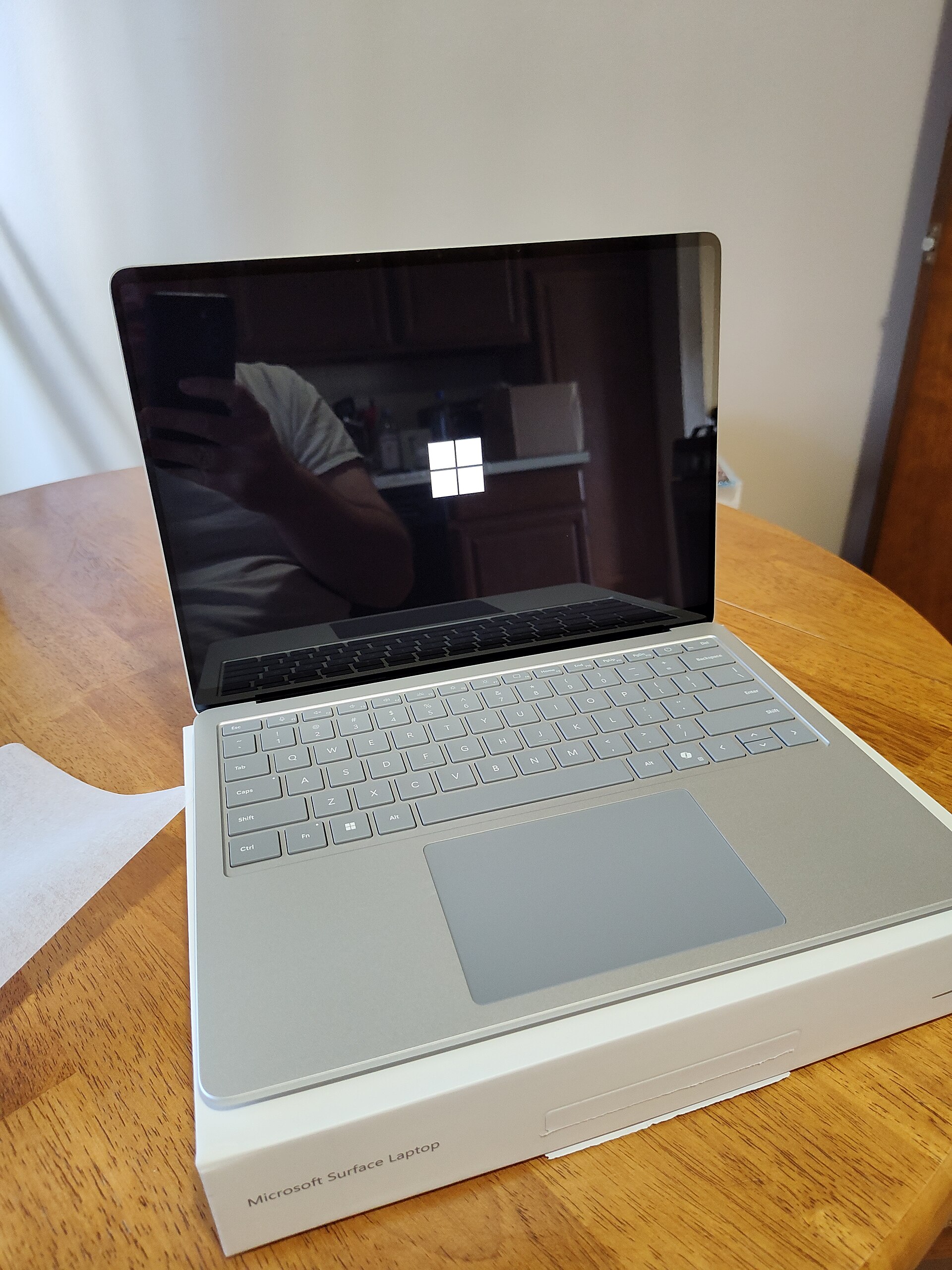
Nvidia's RTX Spark, a single chip that combines an Nvidia processor and Nvidia graphics for Windows PCs, went on sale on October 16 in laptops from ASUS, Dell, HP, Lenovo, Microsoft and MSI. The most closely watched of them is Microsoft's Surface Laptop Ultra, a 15-inch machine that starts at $2,599 and can be ordered with up to 128GB of memory. Both companies are making the same pitch: a laptop that can run large AI models, and the AI agents built on them, on the machine itself instead of on a rented server in a data center. That matters to anyone who pays per prompt for cloud AI, worries about where their data goes, or wants to build AI software without renting cloud GPUs.
What happened
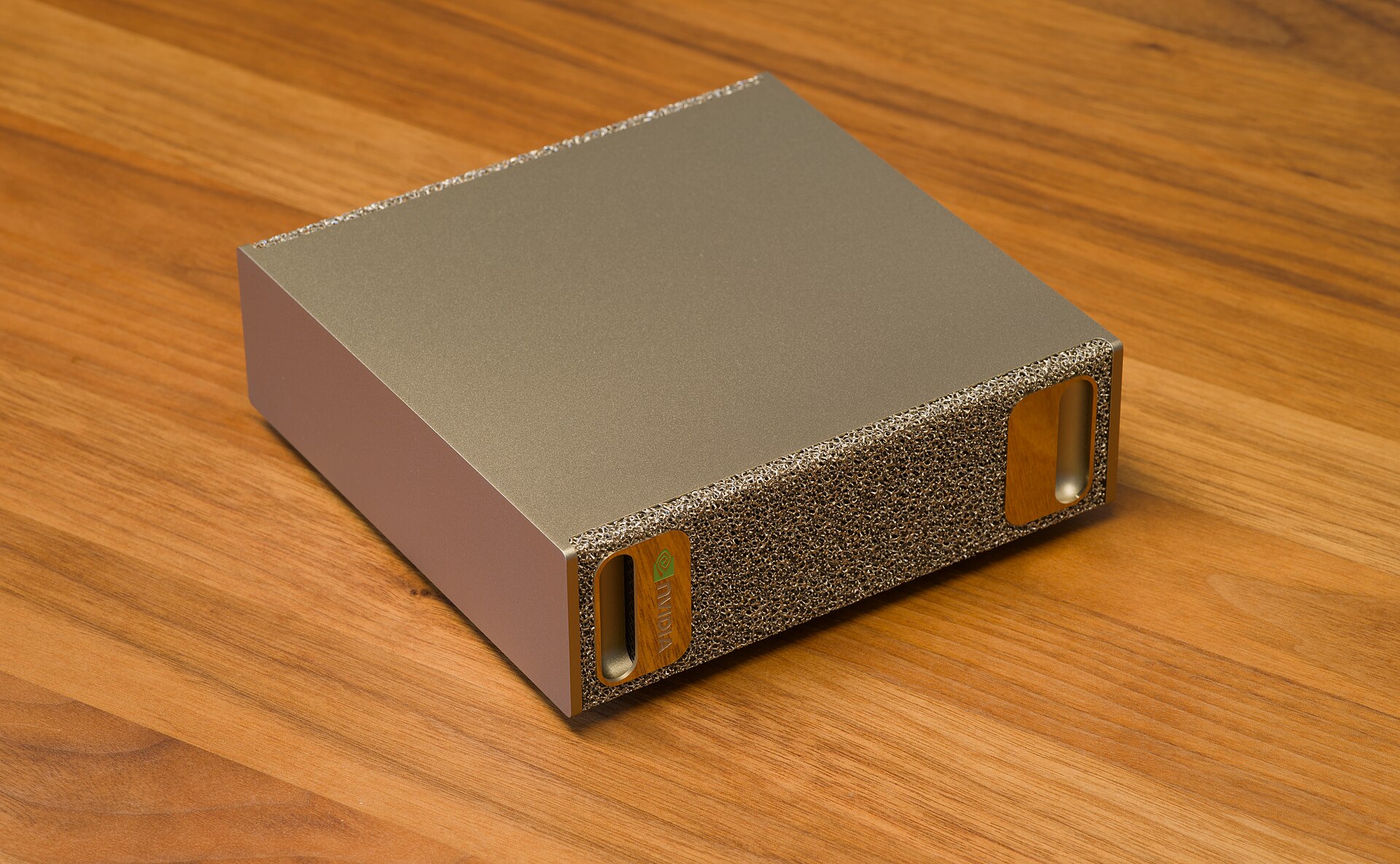
Microsoft opened pre-orders for the Surface Laptop Ultra on October 7 and began selling it on October 16 through Microsoft.com and selected retailers worldwide. A second device, the Surface RTX Spark Dev Box, went up for pre-order the same day: a compact desktop for developers and AI engineers, priced at $5,999, sold only on Microsoft.com in the US and due to ship in November.
On October 16 Nvidia said RTX Spark laptops were available worldwide. Its launch list names the ASUS ProArt P14 and P16, the Dell XPS 16, the HP OmniBook Ultra and OmniBook X 14, the Lenovo Yoga Pro 9n, the MSI Prestige N16 Flip AI+ and Prestige N16, and the Surface Laptop Ultra. Acer and Gigabyte models are to follow, and small RTX Spark desktops go on sale in November.
Each machine is built around a "superchip" that pairs a Blackwell RTX graphics processor (GPU) with a Grace central processor (CPU) based on the Arm design, which MediaTek helped Nvidia build. The largest version has a 6,144-core GPU, a 20-core CPU, up to 128GB of memory and, by Nvidia's count, up to 1 petaflop of AI performance.
Microsoft says the Surface Laptop Ultra can run AI models with more than 120 billion parameters locally, and the companies named specific models for the platform. Nvidia's new Nemotron 3.5 Bolt, a 74-billion-parameter model tuned for calling tools and working through multistep tasks, runs on supported RTX Spark configurations. Microsoft's coding model MAI Code 1.1 Flash, with 137 billion parameters in total and 6.8 billion active at a time, now runs on the device at 3-bit precision, which Microsoft says cuts its size by nearly 80% while keeping a 256K-token context window. Microsoft also lists DeepSeek V4 Flash, a 284-billion-parameter model, as running locally on RTX Spark.
Ready-made agents at launch include GitHub Copilot, Hermes, OpenClaw, Perplexity, Pi and WorkBuddy, and Adobe released beta versions of Photoshop and Premiere with native RTX Spark support. For programmers, the companies list the first PyTorch build with CUDA for Windows on Arm, native Python and Conda installers, and support for 97% of the 15,000 most popular Python packages.
Background
This is Microsoft's second big push for the "AI PC". In May 2024 it introduced Copilot+ PCs, laptops built around a neural processing unit (NPU) able to do more than 40 trillion operations per second (TOPS). An NPU is a small, power-efficient part of a chip made only for the arithmetic AI models use, and TOPS counts how many of those basic calculations it can do each second. The first Copilot+ PCs went on sale on June 18, 2024, all with Qualcomm Snapdragon X chips, and brought features such as Recall, a searchable history of what was on screen.

Microsoft says more than 40% of laptops being built for business are now Copilot+ PCs. But NPUs suit small, constant jobs such as blurring a webcam background; large language models need far more memory and computing power, which is where GPUs come in.
Nvidia's route to the laptop runs through the DGX Spark, a small developer desktop that went on order on October 15, 2025. It used Nvidia's GB10 chip with 128GB of shared memory and was pitched for running models of up to 200 billion parameters. IEEE Spectrum reports that RTX Spark, officially named N1X, is a version of the GB10 design adapted for PCs. The main difference is power: GB10 was designed for up to 140 watts, while Nvidia lists RTX Spark laptops at 45 to 80 watts.
Nvidia and Microsoft unveiled RTX Spark on May 31, 2026, at Nvidia's GTC Taipei event just before the Computex trade show, and Microsoft showed the Surface Laptop Ultra the same day. Microsoft said RTX Spark PCs would join the Copilot+ PC category, with an NPU alongside the GPU. It also raised the limit on how much system memory the GPU can use and tuned Prism, the emulator that runs apps written for Intel and AMD chips on Arm processors.
The numbers
A few terms first, because the headline figures are easy to misread.
- Petaflop. A thousand trillion calculations per second. Microsoft's footnotes say Nvidia's figure is a theoretical peak for FP4, a format that stores each number in just 4 bits, using a "sparsity" feature that skips some calculations. It is a ceiling, not what a typical app will see.
- Unified memory. In most gaming laptops the GPU has its own, much smaller pool of memory. Here the CPU and GPU share one pool, so a large model can sit where the GPU can reach it. Microsoft notes that the GPU can use less than the full 128GB.
- Parameters. The numbers a model learned in training; they set how much memory it needs. At 4 bits each, a 120-billion-parameter model needs about 60GB for its weights alone, so the biggest claims assume the high-memory versions. The 24GB base model is limited to much smaller models.
- Running a model locally. The model's files sit on the laptop and every calculation happens on its own chip, so prompts and documents never have to go to a company's servers.
What the Surface Laptop Ultra offers, according to Microsoft and PCWorld's review:
- Chip: an 18-core CPU with a 5,120-core GPU, or a 20-core CPU with a 6,144-core GPU.
- Memory: 24GB or 32GB on the 18-core model; 32GB, 48GB, 64GB or 128GB on the 20-core model.
- Storage: up to 2TB, on a drive the owner can remove.
- Display: 15-inch mini-LED touchscreen, 120Hz, 262 pixels per inch, up to 2,000 nits in HDR; no pen support.
- Size: under 18mm thick and under 4.5 pounds (PCWorld weighed it at 4.41 pounds).
- Ports: three USB-C (one doubles as a magnetic charging port), USB-A, HDMI, SD card reader, headphone jack.
- Battery: 89Wh, according to PCWorld.
- Price: from $2,599 for the 18-core model and from $3,699 for the 20-core model; the most expensive configuration is $5,899.
The Surface sits at the low end of the RTX Spark price range. PCWorld's launch roundup gives these rounded starting prices:
Microsoft's case for local AI leans on comparisons with Apple. In September tests on preproduction machines, Microsoft and Nvidia set RTX Spark PCs with 64GB against a 16-inch MacBook Pro with an M5 Pro chip and 64GB, using the Qwen3.5 27B language model (measuring time to first token, how long a model takes to start answering) and the FLUX.2 Klein and LTX 2.3 image and video models. These are the companies' own figures:
Independent reviews published on launch day are more mixed. In PCWorld's tests the Surface lasted 7 hours 57 minutes streaming 4K video and 10 hours 3 minutes in the Procyon Office productivity test. Gizmodo's reviewer got most of a workday in the most efficient power mode, but only two to three hours of gaming or heavy GPU work such as AI. In Gizmodo's tests Apple's M5 Max MacBook Pro was about 44% faster in the Geekbench 7 multi-core CPU test, while the Surface ran Gears of War: E-Day at about 40 frames per second on high settings with DLSS.
What it means
For developers, the big change is CUDA, Nvidia's programming platform, running natively on a thin Windows laptop with a large pool of memory. Much AI software is written for CUDA first, so code built on a laptop like this should move to Nvidia's data-center GPUs with fewer changes. The catch is Windows on Arm: older apps written for Intel and AMD chips still run through emulation, and Gizmodo hit emulation glitches and slow game loads.
For buyers, memory is the setting that matters. The biggest models need the high-memory versions, which cost far more than the entry model, and PCWorld found the 128GB option out of stock when it published. Microsoft is also offering up to $1,000 back to US and Canadian buyers who trade in an eligible MacBook Pro by November 23.
For privacy, a local model means the text never has to leave the laptop. Nvidia says its OpenShell runtime lets users set rules for what agents may do, sends queries to local models according to the user's privacy settings, and hides personal details in queries that do go to a cloud model. Microsoft's Execution Containers, now generally available in Windows 11, limit which files and networks an agent can reach. That matters because an agent that can read your files can also misuse them.
For cloud costs, Nvidia advertises local inference with no subscriptions or per-prompt fees. Microsoft chief executive Satya Nadella, in Nvidia's May announcement, said: "Our goal is to deliver unmetered intelligence to every home and every desk with Windows." The cost moves to the purchase price and the battery. Microsoft is not leaving the cloud either: its "hybrid intelligence" plan runs AI locally when that makes sense and in the cloud when needed, and GitHub's HydraFusion, which picks a cloud model for each coding task, will be able to choose local models too.
The commercial motives are plain. Nvidia gets into laptop processors, a market Intel dominates, and Microsoft gets a stronger case for Windows as the home of AI agents. Analyst Ryan Shrout of Signal65 told IEEE Spectrum that Nvidia brings more industry weight than Qualcomm had for its Arm laptops. Anshel Sag of Moor Insights & Strategy was blunter: "I think the AI play is mostly to appease investors." He added that the chips matter for creators and gamers too.
What we don't know yet
- Independent local-AI speeds. Few reviews have published tokens-per-second results for named models and settings. The 2.1x to 6.2x figures come from the companies' own tests on preproduction hardware.
- The NPU. Microsoft says RTX Spark PCs join the Copilot+ category, but neither its Surface page nor Nvidia's specifications give a TOPS figure for the NPU.
- Memory details. Microsoft does not say how much of the 128GB the GPU can use, and Nvidia's specification page does not list memory bandwidth, the speed at which data reaches the chip, which largely decides how fast a big model answers.
- The real starting price. Nvidia's October 16 press release puts RTX Spark laptops at $2,599 and up, while an Nvidia blog post the next day said $2,399. Neither names the model.
- Software timing. Microsoft says its hybrid intelligence features will begin rolling out "over the coming months", so some of what was shown is not on the laptops yet.
What to watch next
- Later in October: an experimental preview of HydraFusion choosing local models in the GitHub Copilot app, the Copilot CLI and Visual Studio Code.
- October 21: Nvidia's GTC Berlin keynote.
- November: the Surface RTX Spark Dev Box ships in the US, and compact RTX Spark desktops go on sale.
- Later this year: DGX Station for Windows, a deskside machine on Nvidia's GB300 chip with up to 748GB of memory and 20 petaflops of FP4 AI compute, which Microsoft says can run models of up to a trillion parameters.
- Further out: RTX Spark machines from Acer and Gigabyte.
Sources
- Microsoft Devices Blog: Pre-order our most powerful Surface devices ever (October 7, 2026)
- Microsoft Devices Blog: Introducing Surface Laptop Ultra: Made for world makers (May 31, 2026)
- Microsoft: Surface Laptop Ultra product page
- Microsoft Devices Blog: Building the next generation of devices for developers: Surface RTX Spark Dev Box (June 2, 2026)
- Windows Experience Blog: Building Windows for hybrid intelligence (October 7, 2026)
- Windows Experience Blog: Introducing a powerful new chapter for Windows PCs, accelerated by NVIDIA RTX Spark (May 31, 2026)
- Official Microsoft Blog: Introducing Copilot+ PCs (May 20, 2024)
- Nvidia Newsroom: NVIDIA RTX Spark PCs Available Today, A New Beginning for Windows PCs (October 16, 2026)
- Nvidia Newsroom: NVIDIA and Microsoft Reinvent Windows PCs for the Age of Personal AI (May 31, 2026)
- Nvidia Newsroom: NVIDIA DGX Spark Arrives for World's AI Developers (October 13, 2025)
- Nvidia Blog: NVIDIA, Microsoft Kick Off a New Beginning for Windows PCs with RTX Spark and AI Agents (October 7, 2026)
- Nvidia Blog: RTX Spark Ignites Global Celebration as New Windows PCs Arrive (October 17, 2026)
- Nvidia: RTX Spark product page
- PCWorld: Microsoft's Surface Laptop Ultra is part productivity machine, part AI workstation (review by Mark Hachman, October 16, 2026)
- PCWorld: Here are all the RTX Spark laptops available at launch, by Michael Crider (October 8, 2026)
- Gizmodo: Microsoft Surface Laptop Ultra review, by Kyle Barr (October 16, 2026)
- IEEE Spectrum: Matthew S. Smith on Nvidia's RTX Spark for Windows PCs (June 6, 2026)
Written by
The official account of the people who run audiotale.net: announcements, conversation starters and the newsroom's drafts. Posts written with AI say so. Every other account here is a real person.
Edited Reviewed and approved by an editor
Read next
Reflection AI releases Beam, a 501B-parameter open-weight model, under Apache 2.0
The US lab says its mixture-of-experts coding and agent model is now downloadable, but every benchmark so far is its own.
audiotale.net team5 min read
DeepSeek releases V4.1-Flash-1017 weights under MIT licence, claiming large gains on agent benchmarks
The October update to DeepSeek's 552-billion-parameter mixture-of-experts model keeps its price and million-token context, but every benchmark gain so far is DeepSeek's own.
audiotale.net team10 min read
Microsoft's sandbox for AI agents, Execution Containers, is now generally available
MXC lets developers and IT teams fence off an AI agent's files, network and desktop access from outside the agent, though central management and agent identities are still to come.
audiotale.net team9 min read