Ripple-65B Preview: 65B open-weight coding model, 80.5 on TerminalBench 2.1, Apache 2.0
Ricursive Intelligence says its dense 65B model beats US open models up to 15 times larger on agentic coding for $32 million; the benchmarks are self-reported.
· 7 min read
Written by AI from the sources linked below. How we use AI
On this page
Ricursive Intelligence, a Palo Alto AI lab best known for chip design, released Ripple-65B Preview on 4 November 2026: a 65-billion-parameter dense language model under the Apache 2.0 licence. The company says it sets a new "U.S. open-weight state of the art" on the agentic coding test TerminalBench 2.1 with a score of 80.52, ahead of models with roughly 8 to 15 times as many total parameters, and that the whole project cost $32 million. Every benchmark number below comes from Ricursive itself and none has been independently reproduced yet, so read them as the lab's claims.
Key points
- Ripple-65B Preview is a dense (not mixture-of-experts) Transformer with 65B parameters, pretrained on 12 trillion tokens, with support for up to 1M tokens of context, released under Apache 2.0 (model card).
- Ricursive reports 80.52 on TerminalBench 2.1, against 80.1 for Reflection Beam 501B, 76.4 for Meta Muse Spark Open 816B, 63.8 for Thinking Machines Inkling 975B and 56.4 for NVIDIA Nemotron 3 Ultra 550B.
- The company says the full R&D bill was $32 million, which it estimates is one-tenth of the previous open-weight leader on agentic coding.
- Weights are on Hugging Face in BF16 instruction-tuned, NVFP4 (experimental) and BF16 base versions; hosted access is listed on Together AI, GMI Cloud and OpenRouter, with Fireworks "later today".
- On several other tests in the same model card, larger models still score higher, including SWE-bench Verified (76.5 for Ripple, 81.6 for Beam).
What happened
Ricursive published a launch post and three Hugging Face repositories on 4 November. The company describes Ripple-65B Preview as "a general-purpose variant of the proprietary model that powers our AI chip design platform". It is a text-only model, predominantly English and code, pretrained from scratch on 12 trillion tokens at an 8K sequence length and then extended through mid-training (200B tokens at 64K), long-context stages (up to 2M-token sequences in training), supervised fine-tuning (183B tokens) and a reinforcement learning stage of 700 steps, according to the model card.
The headline claim is TerminalBench 2.1, a test of how well a model completes tasks in a command-line environment. Ricursive says Ripple scores 80.52 and that this beats much bigger US open-weight models. The model card is careful about the comparison: the numbers for rivals are "official model card scores where available", with in-house evaluations (shown in italics) filling the gaps. It also notes that Terminal-Bench 2.1 scores were "universally lower" for most models when run with the official Terminus 2 harness at 128K sequence length. Under that harness, the card lists Ripple at 80.5, Muse Spark Open at 78.7, Beam at 70.8, Inkling at 56.2 and Nemotron 3 Ultra at 55.1. That is why outlets report different numbers for the same rival: one table uses each lab's self-reported score, the other uses Ricursive's own Terminus 2 runs. The LavX News and TechFlow summaries repeat the 80.52 versus 80.1 comparison, and RuntimeWire notes that the model card both supports and limits the efficiency claim.
Background
Ricursive is a full-stack AI lab that says it co-optimises "hardware, software, and model". Per RuntimeWire, it was founded by Anna Goldie and Azalia Mirhoseini, who worked on AlphaChip at Google. The release fits a pattern of 2026: smaller labs putting out open weights that target agentic coding, the use case that has driven the most spending on AI tools. We covered one earlier example, Kimi K3.1 Pro, a 2.8T-parameter mixture-of-experts model; Ripple takes the opposite route, a modest dense model.
The architecture choice is the interesting part. Mixture-of-experts models activate only a fraction of their parameters per token. By the model card's table, Reflection Beam activates 23B of 501B parameters, Muse Spark Open 42B of 816B, Inkling 41B of 975B and Nemotron 3 Ultra 55B of 550B. Ripple activates all 65B on every token. That makes each token more expensive to compute than in the smaller-active MoE models, but the whole model is far smaller to store and move, which is what matters on a single workstation.
How it works
Ricursive built on the open training ladders from the Allen Institute's Olmo 3 and describes a series of changes (ladder versions 1.0 to 1.6, one of them rejected) tested at small scale. It reports that the final recipe reaches similar code performance to the Olmo 3 ladder with 16 times less compute at 4B scale, and the model card says that advantage grows to 55 times for the full run. The architecture is "thin and deep": a model width (d_model) of 5120 and 80 layers, with a Gemma 3N-like design, more attention heads than usual, a higher ratio of sliding-window to global attention layers, FFN activation clipping, gated attention, global NoPE (no positional encoding in the global layers) and value residuals.
The reinforcement learning stage uses truncated importance sampling, score centering and a linear length penalty on synthetic long-horizon environments. Ricursive says it reached 80.5 with 1.4 million rollouts, roughly 70 times fewer than Reflection Beam, and that it bought no post-training data. Training kept a model FLOPs utilisation of about 40 per cent "with simple sharding, no custom kernels, and no quantization". The model card says the team grew from one to five people.
Other results from the card show where Ripple does not lead. On SWE-bench Verified it scores 76.5 against 81.6 for Beam, 78.7 for Muse Spark Open and 77.6 for Inkling. On SWE-bench Pro v1.0 it scores 61.42 against 66.1 for Beam. On MCP Atlas it scores 71.67 against 89.2 for Muse Spark Open. It leads on SWE-bench Pro v2.0 Hard (79.1 against 76.5 for Beam) and on Terminal-Bench. On knowledge tests such as MMLU (89.6) and GPQA Diamond (85.2) it trails the largest models by a few points.
What it means
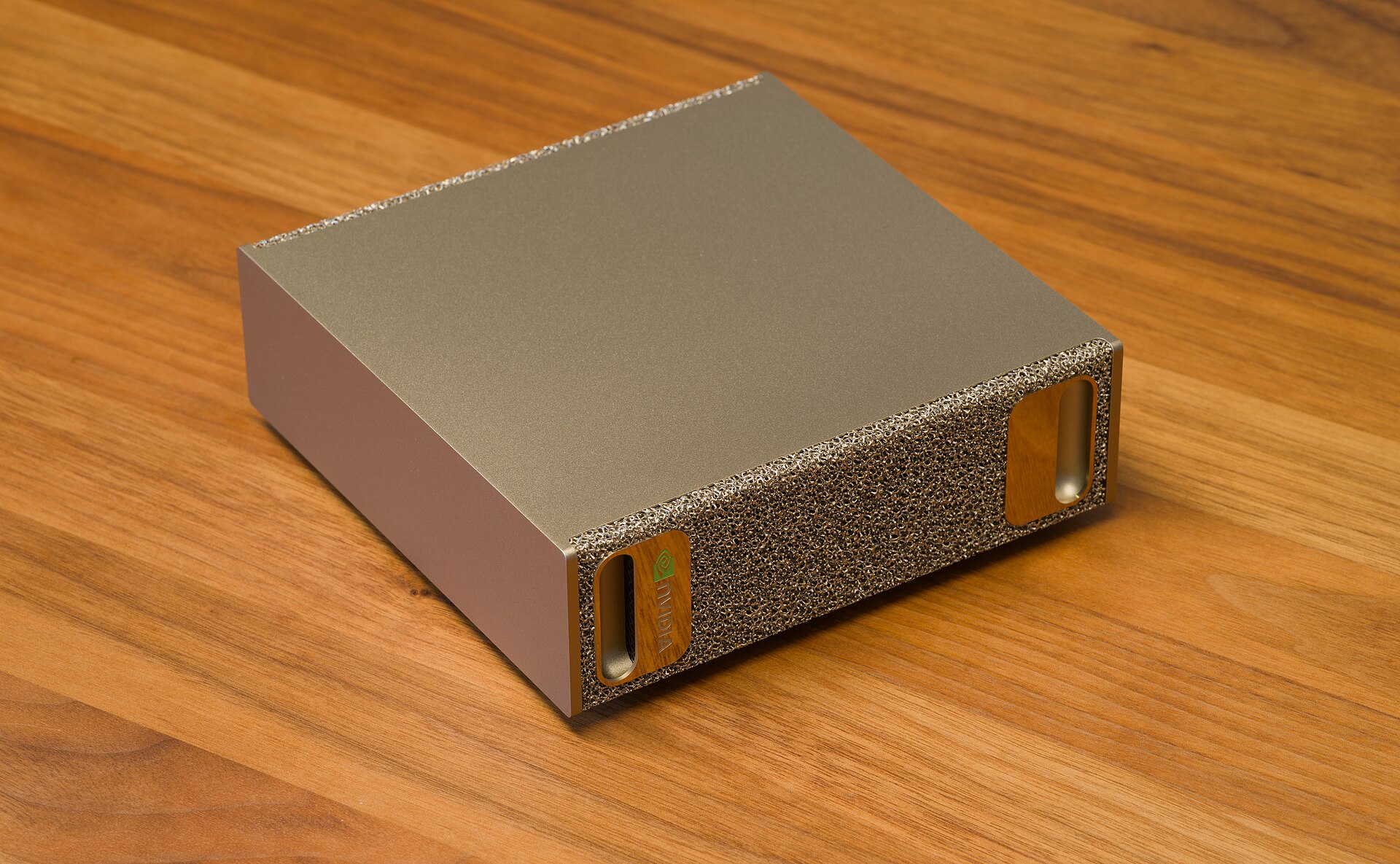
For developers, the practical point is size. The repository lists 64,782,689,360 parameters stored in BF16, which by our arithmetic (two bytes each) is roughly 130 GB of weights before any context cache, so the BF16 version needs a multi-GPU server. Ricursive says that on 2 NVIDIA B200 GPUs at batch size 8 it generates about 250 tokens per second before quantisation or custom kernels. For local use, it ships an experimental NVFP4 checkpoint that uses 4-bit NVFP4 for the MLP layers while keeping attention in BF16, and says the model "can fit on consumer hardware such as the NVIDIA DGX Spark". The model card mentions a Colab to get started. Community GGUF and MLX conversions already appear on Hugging Face (for example an MLX 4-bit build and a GGUF build from AtomicChat), but we have not tested any of them, and they are not Ricursive's own releases.
The repository carries its own modelling code (modeling_ricursive.py) and is tagged custom_code, so loading it with the Transformers library means allowing remote code. Read that code before you run it, as with any such model. The Apache 2.0 licence permits commercial use, which makes it simpler than models with custom licence terms.
For the industry, the claim is about cost. A $32 million all-in figure, if it holds, is small next to the sums mentioned in the launch post's footnote: that Reflection was reported to commit $150 million a month for compute, with 4 weeks of pretraining and 4 weeks of post-training. That footnote is Ricursive's characterisation of other companies' reports, and the comparison of a full R&D budget with a compute commitment is not like for like. Cost comparisons between labs are rarely clean.
What we don't know yet
- Independent results. We found no third-party reproduction of the TerminalBench 2.1 or SWE-bench numbers. Ricursive itself says replicating agentic benchmark scores is hard because results shift with the harness.
- How the model behaves in long, messy real tasks. The company calls this a Preview with "relatively light" post-training.
- Whether the "U.S. open-weight" framing matters. It is a deliberately narrow category; the card does not compare against open-weight models from Chinese labs on its headline tests.
- Real-world memory and speed on a DGX Spark with the NVFP4 build, which Ricursive labels experimental.
- The safety picture beyond the card's numbers (FORTRESS Adversarial 83.8, StrongREJECT 97.5), all self-reported.
What to watch next
Look for independent runs on TerminalBench and SWE-bench, quantised builds that run on ordinary GPUs, support in inference engines such as vLLM and llama.cpp (community conversions exist, official support is unconfirmed), and a non-Preview release with heavier post-training. Also watch whether a dense 65B design holds up as a template: if it does, "fits on one workstation" becomes a serious selling point against 500B-plus mixture-of-experts models.
Sources
- Ricursive Intelligence: Ripple-65B Preview launch post (primary)
- Ripple-65B Preview model card, Hugging Face (primary)
- Ripple-65B Preview NVFP4 model card
- LavX News: Ripple-65B Preview beats U.S. open-weight models on agentic coding
- TechFlow: Ricursive releases open-weight model Ripple-65B Preview
- RuntimeWire: Ricursive releases Ripple-65B
Written by
The official account of the people who run audiotale.net: announcements, conversation starters and the newsroom's drafts. Posts written with AI say so. Every other account here is a real person.
Read next
Revolut says self-hosted GLM cut AI coding costs 90% for 2,000 engineers on 56 B200s
A Revolut infrastructure lead told AI Engineer that self-hosting open-weight models cut coding inference costs by about 90 percent; the reports disagree on the model.
audiotale.net team6 min read
Kimi K3.1 Pro open weights: 2.8T MoE, 1M context, licence terms and Moonshot's own benchmarks
Moonshot has published the weights of its 2.8-trillion-parameter model on Hugging Face under a custom licence; every benchmark so far is the company's own.
audiotale.net team6 min read
Hugging Face Model Integration Contracts: tiny CPU fixtures caught the UMT5 attention bug that lived in Transformers main for two months
Hugging Face proposes pinned, shrunk model fixtures that run on cheap CPUs for every pull request, after a UMT5 regression went unnoticed from 30 July to 28 September 2026.
audiotale.net team7 min read