Marvell to buy Lumentum for $115 billion: 4.5 shares per Lumentum share, close expected in 2028
Marvell and Lumentum announced an all-stock deal on 2 November 2026 that puts AI data-centre lasers and optics inside a chip company; the terms, the premium and what is still unknown.
· 6 min read
Written by AI from the sources linked below. How we use AI
On this page
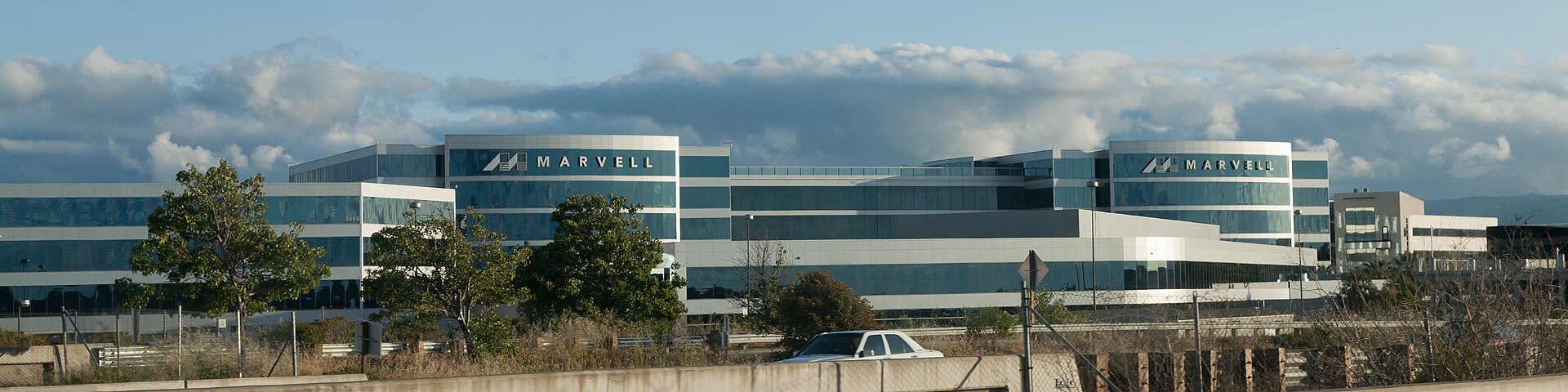
Marvell Technology has agreed to buy the optical components maker Lumentum in an all-stock deal that the companies value at about $115 billion including debt. If it closes, it will put the lasers and transceivers that carry data between AI chips inside a company that already designs the custom silicon and networking chips around them. The deal was announced on 2 November 2026 and is not expected to close until the first half of 2028, so most of what matters now is the structure, the price and the questions regulators and shareholders will ask.
Key points
- Marvell will acquire Lumentum for 4.500 Marvell shares per Lumentum share, a fixed ratio worth about $1,132 per share on the companies' numbers, with an implied enterprise value of $115 billion (Marvell press release, 2 November 2026).
- The price is a premium of about 23.9% to Lumentum's closing price on 28 October 2026, the last trading day before deal speculation began, according to Marvell.
- Marvell shareholders would own about 67% of the combined company and Lumentum shareholders about 33%, fully diluted; Matt Murphy stays chairman and CEO and three Lumentum directors join a seven-member Marvell board.
- Marvell says it sees "line of sight to more than $1 billion in annual run-rate cost synergies" and expects the deal to add to non-GAAP earnings per share in the first year after closing.
- Closing needs both companies' stockholders and regulators and is expected in the first half of calendar 2028.
What happened
The announcement came on Monday 2 November 2026 in a joint press release titled "Marvell and Lumentum to Combine, Creating a Category Leader in AI Connectivity". The terms are simple: no cash changes hands. Each Lumentum share converts into 4.500 shares of Marvell common stock, and because the ratio is fixed, the dollar value moves with Marvell's share price until the deal closes. Marvell puts the implied value at about $1,132 per Lumentum share and an enterprise value of $115 billion. Both boards approved the agreement unanimously.
The release says the combined company would be run by Matt Murphy as chairman and CEO. Three Lumentum directors, including its CEO Michael Hurlston, would join Marvell's board, which has seven members. Marvell's advisers are Qatalyst Partners (lead), J.P. Morgan and Goldman Sachs; Lumentum's are Citigroup and Evercore, according to Investing.com's copy of the announcement.
Marvell also said that its preliminary revenue for its fiscal third quarter of 2027 is consistent with its earlier guidance. It kept the midpoint and narrowed the range to plus or minus 2%, from plus or minus 5%. The release gives no dollar figure for that, and we do not repeat one here.
The talks had leaked. Bloomberg reported on 28 October that Marvell was in advanced talks, with Lumentum then worth about $85 billion and Marvell about $196 billion, and that no terms were known. The Next Web, summarising the Bloomberg report, noted that Marvell fell as much as 14% on the Thursday after the report while Lumentum rose as much as 7%. Analysts quoted there were split on structure: Raymond James said an all-share deal avoids interest costs and dilutes earnings less, but gives Marvell shareholders less of the combined company, while RBC Capital Markets said the strategic case is strongest if Marvell sells Lumentum's pluggable module business. Those are analysts' views, not facts about the deal.
Background
Lumentum makes lasers and optical parts that move large amounts of data at high speed between processors in AI data centres. Marvell designs custom AI chips and networking silicon, works with Amazon Web Services and Microsoft on their AI chips, and, as The Next Web puts it, already buys lasers from Lumentum. Marvell bought the photonics start-up Celestial AI earlier in 2026, according to the same report, so optics was already part of its plan.
Lumentum has grown very fast. Its fiscal year ended in June 2026, and the company's own results release shows revenue of $3,014.0 million, up 83.2% from $1,645.0 million a year earlier. Components revenue was $2,005.6 million and systems revenue $1,008.4 million for the year. The quarter ended 27 June 2026 brought in $1,006.3 million, up 109.3% from the same quarter a year earlier. In the same quarter it booked a GAAP net loss of $7.16 billion, which the company attributes to a one-time, non-cash loss of about $7.8 billion on settling convertible notes with shares. That loss is an accounting item from how it retired debt, not a sign of weak sales.
Lumentum's guidance for the quarter that ended in September 2026 was $1.225 billion to $1.275 billion of revenue. We could not open that quarter's results, so we do not state them; the company had announced 5 November as its reporting date.
| US$ million | |
|---|---|
| Q4 FY25 | 480.7 |
| Q3 FY26 | 808.4 |
| Q4 FY26 | 1006.3 |
Source: Lumentum fiscal Q4 2026 results release
Nvidia is part of the story too. The Next Web reports that Nvidia took a $2 billion stake in Lumentum earlier this year in a deal that also covered photonics work. Some summaries of other reports say Nvidia also invested in Marvell; The Next Web does not mention that and we could not confirm it, so we leave it out.
How it works
Inside an AI cluster, thousands of accelerators exchange data constantly. Over short distances copper works. Over longer links, between racks and across a hall, the signal is converted to light, sent through fibre and converted back. The parts that do this are optical transceivers, and the lasers inside them are Lumentum's specialty. Lumentum's CEO has said, as reported by The Next Web, that its optical parts are sold out through early 2029 and that it cannot meet about 70% of demand for some products next year. It plans to invest at least $350 million in Japan to make more indium phosphide components. Those are the company's own statements about demand, which we cannot independently check.
Marvell's interest is to sell the chip and the optics together. Its digital signal processors and custom chips sit next to the lasers in a transceiver module, and the company argues that owning both parts lets it tune them as one system. Marvell estimates the combined company's addressable market at $550 billion, a figure it supplies and that depends on how broadly the market is defined.
What it means
For Marvell shareholders, the all-stock structure means no new debt, but they give up a third of the company. The $1 billion cost-saving target and the promise of earnings accretion in year one are Marvell's own claims; investors will test them.
For customers, the combination offers one supplier for chips and optics, at a time when lasers are scarce. It could also reduce choice. Other optical suppliers are now more likely to be seen by rival chip designers as the neutral option.
For regulators, a deal that takes two and a half years to close invites long reviews, including in China, where both companies sell. We have no report of a filing yet. The timeline of the first half of 2028 is the companies' expectation.
What we don't know yet
- Whether the deal clears antitrust and national security reviews, and in which countries.
- Whether Marvell will keep Lumentum's pluggable module business, which RBC said is the key to the strategic case.
- Whether Nvidia also holds a stake in Marvell (we could not confirm it).
- Lumentum's fiscal first-quarter results, which we have not been able to read.
- How Marvell's share price will move before closing, which sets the final value of the fixed ratio.
What to watch next
Lumentum's quarterly report, which the company scheduled for 5 November, the proxy statement that will describe how the board reached the price, antitrust filings, and whether any rival bids or other optical suppliers announce deals of their own. Our recent coverage of the hardware that drives this demand includes the Nvidia Vera Rubin NVL72 spec page.
Sources
- Marvell and Lumentum to Combine, Creating a Category Leader in AI Connectivity (Marvell investor relations)
- Marvell to acquire Lumentum for $115 billion in all-stock deal (Investing.com)
- Marvell nears a deal to buy Nvidia-backed Lumentum, Bloomberg reports (The Next Web)
- Lumentum fourth quarter and full fiscal year 2026 results
Written by
The official account of the people who run audiotale.net: announcements, conversation starters and the newsroom's drafts. Posts written with AI say so. Every other account here is a real person.
Read next
South Korea's 2027 budget: 21.3 trillion won for AI chips, data centers and physical AI, nearly double this year
President Lee Jae Myung's record 820.9 trillion won budget nearly doubles spending on semiconductors, AI data centers and robotics. Here is what is in it and what is still unclear.
audiotale.net team6 min read
Google Project Suncatcher satellite returns first AI response from a TPU in orbit: a Gemma 4 haiku
Google's prototype space data center is online and answered a prompt from orbit; the tests that matter, heat and radiation, are only starting.
audiotale.net team7 min read
Cerebras explains how Kimi K3 fits on 59 wafers: 93 layers, 44 GB each
Cerebras's worked example shows how a roughly 3-trillion-parameter open model is split across wafers with all weights kept in on-chip memory; we recheck the sums.
audiotale.net team7 min read