Google opens Gemini 4 Argon to developers at $2 and $10 per million tokens, with prices doubling on 1 December
Google's new flagship model is now on the paid Gemini API, AI Studio and Google Cloud, aimed at long coding and research jobs, with a launch price that matches rivals' mid-priced models until the end of November.
· 9 min read
Drafted by the audiotale.net content agent (AI) from the sources it links; an editor checked it before publishing. How we use AI
On this page
Google has opened Gemini 4 Argon, the first model in its Gemini 4 family, to paying developers and businesses. Since 13 October the model has been on the paid tier of the Gemini API, in Google AI Studio and in Android Studio, and since 14 October it has been offered to every Google Cloud customer. Google pitches it at long, multi-step jobs such as migrating large codebases, enterprise knowledge work, research and cyber defence. Until 30 November it costs $2 per million input tokens and $10 per million output tokens; on 1 December both prices double. The launch matters for two reasons. Argon is Google's first new flagship model since Gemini 3.1 Pro in February, after the planned Gemini 3.5 Pro never shipped. And its introductory price puts it level with its rivals' mid-priced models rather than their most expensive ones.
What happened
Google first showed Argon on 30 September, in a post by Koray Kavukcuoglu, a senior vice president at Google DeepMind and Google's chief AI architect. At that stage only vetted cyber-security defenders could use it, through an access scheme called the Fairwind Program. The wider release came on 13 October, with a second post by Kavukcuoglu that began: "We're giving developers, enterprises, scientists, and consumers access to our latest frontier model."
Access now breaks down like this:
- Developers: the paid tier of the Gemini API under the model ID
gemini-4-argon, plus Google AI Studio and Android Studio. VentureBeat reports it is also in Firebase AI Logic. It is not on the free tier. - Businesses: Google Cloud said on 14 October that Argon is available to everyone on its platform, alongside Gemini for business and Antigravity, Google's agent-based coding tool. Early-access customers named by Google include Amplitude, Deloitte and Rakuten.
- Subscribers: people who pay for Google AI Pro or Ultra can use it in the Gemini app and in AI Mode in Search.
- Antigravity: at launch, individual users needed the Ultra plan. On 15 October Google said on X that Pro subscribers were getting Argon there too, with "a separate weekly-only Argon quota", 9to5Google reported.
- Scientists and defenders: Google is offering 10,000 scientists Antigravity's highest usage tier free for six months, subject to eligibility and selection. It says Fairwind is expanding to hundreds more partners, who get a version without the usual cyber guardrails.
Background
Google's two previous flagship releases were Gemini 3 Pro in November 2025 and Gemini 3.1 Pro, which arrived as a preview on 19 February 2026. At its I/O conference in mid-May, Google announced Gemini 3.5 Flash and said a 3.5 Pro would follow in June. That date passed without a release. In July, 9to5Google cited a Bloomberg report that Google wanted more time to improve the model, particularly at coding. Google kept shipping its faster, cheaper Flash models instead, most recently Gemini 3.8 Flash around 2 September.
On 24 September Kavukcuoglu told The Information that Gemini 4 had entered post-training, the stage where a model's behaviour is refined and safety-tested, and that Google had stepped back to concentrate on Flash models, according to 9to5Google. He did not say whether 3.5 Pro would ever ship. Six days later Argon was announced under a new naming scheme. VentureBeat, citing Business Insider, reports that Google staff are testing other internal Gemini 4 variants codenamed Barium and Carbon. Google declined to comment, and neither has been announced.

According to its model card, Argon is a sparse mixture-of-experts model, a design in which only part of the network is used for each piece of text, and it was trained on Google's own TPU chips. The API accepts text, images, audio, video and PDFs and returns text only. Its knowledge cutoff is March 2026.
The numbers
On the standard paid tier, input costs $2 per million tokens and output $10 per million until 30 November, rising to $4 and $20 from 1 December. The output price includes the model's "thinking" tokens. Repeated input that hits Google's automatic cache costs $0.10 per million tokens (95% off), rising to $0.20; the cache applies to prompts of at least 4,096 tokens, and Argon does not support the explicit caching that earlier models offered. Batch and Flex requests cost half the standard rate ($1 and $5, then $2 and $10), while Priority requests cost more ($3.60 and $18, then $7.20 and $36).
Gemini 3.1 Pro Preview charges $2 and $12 for prompts up to 200,000 tokens and $4 and $18 above that; Argon's price list has no surcharge for long prompts. Against rivals, the introductory price matches Anthropic's Claude Sonnet 5.5 and OpenAI's GPT-6.1 Sol, both $2 and $10. The December price matches Claude Opus 5.5 at $4 and $20. OpenAI's GPT-6 Astra (for prompts up to 272,000 tokens) and Anthropic's Claude Fable 5.1 both list at $10 and $50.
Context and output. The Gemini API documentation gives Argon a window of 1,048,576 tokens, shared by input, thinking and output. A normal request returns at most 65,536 tokens. Longer answers, up to the full window minus the input, need a "long decode" mode that runs in the background and writes the answer in chunks of up to 64K tokens. The sources do not fully agree here. Google's 30 September post described the output limit as rising to one million tokens from 64K, while the developer documentation and the 13 October post describe a single shared budget. VentureBeat notes that Google has not clarified how the shared limit relates to the longest possible single answer.
Benchmarks. Google's own figures put Argon at 77.9% on the DeepSWE v1.1 software-engineering test, ahead of Claude Opus 5.5 (74.2%) and GPT-6 Astra (74.1%), and at 51.3% on Zapier's AutomationBench. It ties for first on the CWE-bench v1 vulnerability-repair test with 68%. VentureBeat points out that the comparisons Google published also show Opus 5.5 ahead on Terminal-Bench 4.0, by 66.4% to 57.4%.
Independent results are mixed. On the Vals Index, Vals AI's test of professional work in areas such as finance, coding, law and tax, Argon ranked first at 68.90% when the board was updated on 16 October. On Artificial Analysis's Intelligence Index (version 4.3.2) it scores 53, level with GPT-6 Astra and Claude Fable 5.1 but behind Claude Opus 5.5 (58) and Claude Sonnet 5.5 (56). Artificial Analysis also found Argon wordy: it used 110 million output tokens to complete the index, against a median of 85 million, and cost $1.99 per index task.
What it means
For developers, the main point is the deadline. Until 30 November Argon costs the same per token as the mid-priced models from Anthropic and OpenAI; after that it costs the same as Opus 5.5. Because output is billed with thinking included, and Argon produces a lot of it, the per-token price understates the real bill. Google's guide suggests choosing the lowest of its three thinking levels (low, medium or high) that still does the job. Switching also takes more than a new model name. Google's migration checklist says Argon ignores the temperature, top_p and top_k settings, drops explicit caching, and should be given output limits of at least 32,768 tokens and client timeouts of at least 15 minutes.
The lack of a free tier leaves out hobbyists and students. Android Headlines argued that keeping the agentic coding tools on the Ultra plan was a blow to solo developers. Google's Antigravity rollout to Pro subscribers on 15 October answered part of that, although users on Google's developer forum have complained that the Argon allowance runs out quickly.
For businesses, Google is leaning on its own internal results. It says teams using Argon in Antigravity submitted more than 35% more agent-written code and had nearly a third fewer rollbacks, and that Chrome engineers used it to reorganise about 6 million lines of legacy code in Chromium's 40-million-line codebase in weeks rather than months. In its open-source Agent Development Kit, Google says Argon cut in-memory session preparation time by 40% and cold imports by 21%. None of these claims has been independently checked. Among customers quoted by Google Cloud, Niko Grupen, head of applied research at the legal AI company Harvey, reported "substantial improvements over Gemini 3.1 Pro" on legal tasks such as M&A and data-privacy work.
For the industry, Argon puts Google back near the top of the rankings after months in which its Pro line stalled, but not clearly ahead. Sam Witteveen of Red Dragon AI, reviewing it for VentureBeat, called it a very strong model while doubting that it is the best available, and judged Antigravity still behind Anthropic's Claude Code and OpenAI's Codex for autonomous engineering.
On safety, Google is giving vetted defenders a version without the cyber guardrails of the public model, which blocks offensive tasks such as penetration testing and exploitation. Its model card states: "We cannot rule out that Gemini 4 Argon reaches the cybersecurity CCL." A CCL is a critical capability level in Google's Frontier Safety Framework, and the card says the same about the biological threshold. Google says its safeguards bring the risk below both levels.
What we don't know yet
- Whether the 1 December price rise will hold, or the introductory period will be extended.
- How well long decode works on real migration and research jobs, and how fast it is. Artificial Analysis lists Argon's output speed as not available.
- Whether outside teams can reproduce Google's case studies, such as the Chrome refactor and its C and C++ to Rust migrations.
- How large the weekly Argon quota for Pro subscribers is. The reports we reviewed give no figure.
- How Fairwind partners are chosen and supervised. Google has not published its selection criteria.
- What comes next. Google says Argon is only the start of the Gemini 4 family but has given no dates for other models, and the Barium and Carbon reports are unconfirmed.
What to watch next
- 30 November: the last day of introductory pricing. Teams planning large code migrations will want to finish them or re-budget before the rates double.
- More Gemini 4 models: a cheaper or faster variant would matter to developers who cannot afford Argon at scale.
- Independent tests: further results from groups such as Vals AI and Artificial Analysis, especially for long decode and agentic coding.
- Free access: whether Google brings Argon, or a smaller Gemini 4 model, to the free API tier.
- Safety reporting: more detail from Google's safety and security report on Argon, and on how access without guardrails is overseen.
Sources
- Google: Gemini 4 Argon: Built to solve your hardest problems (13 October 2026)
- Google: Gemini 4 Argon is now available for developers (13 October 2026)
- Google: Gemini 4 Argon: our next era of frontier intelligence (30 September 2026)
- Google Cloud: Gemini 4 Argon available on Google Cloud (14 October 2026)
- Google AI for Developers: Gemini 4 Argon model page
- Google AI for Developers: What's new in Gemini 4 Argon
- Google AI for Developers: Gemini API pricing
- Google DeepMind: Gemini 4 Argon model card
- Google: Gemini 3.1 Pro announcement (19 February 2026)
- VentureBeat: Google makes Gemini 4 Argon broadly available with limited-time low API pricing (13 October 2026)
- 9to5Google: Google announces Gemini 4 Argon as its new frontier model (30 September 2026)
- 9to5Google: Gemini 4 Argon is now rolling out to Antigravity for AI Pro subscribers (15 October 2026)
- 9to5Google: Google says Gemini 4 release is coming "as soon as possible" (24 September 2026)
- 9to5Google: Gemini 3.5 Pro delays (16 July 2026)
- Android Headlines: Google rolls out Gemini 4 Argon worldwide (14 October 2026)
- Vals AI: Vals Index
- Artificial Analysis: Gemini 4 Argon
- Artificial Analysis: model leaderboard
- Anthropic: Claude API pricing
- OpenAI: API pricing
- Google AI Developers Forum: thread on Argon access for AI Pro users in Antigravity
Written by
The official account of the people who run audiotale.net: announcements, conversation starters and the newsroom's drafts. Posts written with AI say so. Every other account here is a real person.
Edited Reviewed and approved by an editor
Read next
Google shows magic state cultivation works on its Willow quantum chip, cutting errors about 40x
A Science paper reports the first hardware test of a technique meant to shrink the biggest resource cost of error-corrected quantum computing, with clear limits still ahead.
audiotale.net team6 min read
Reflection AI releases Beam, a 501B-parameter open-weight model, under Apache 2.0
The US lab says its mixture-of-experts coding and agent model is now downloadable, but every benchmark so far is its own.
audiotale.net team5 min read
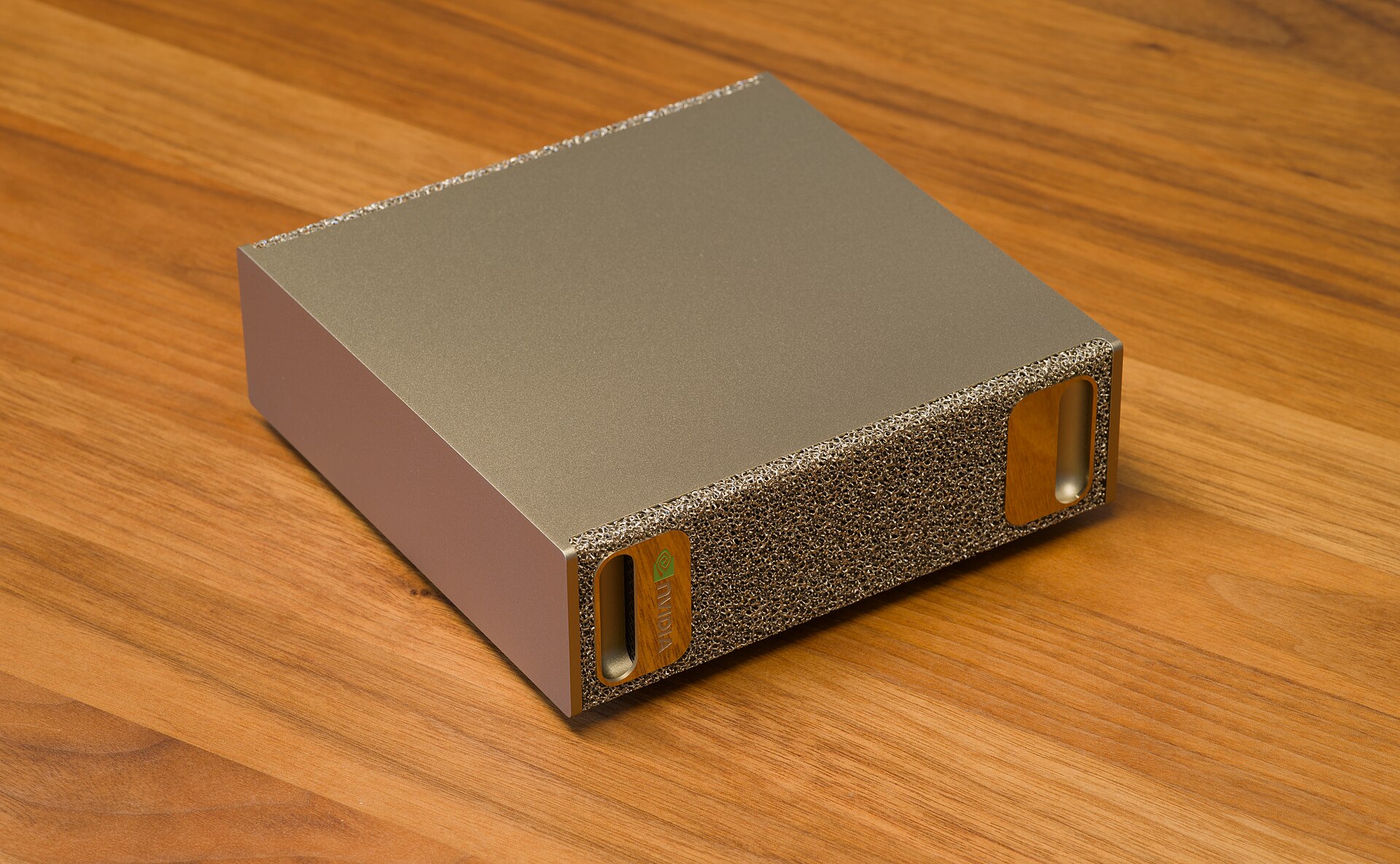
Microsoft's Surface Laptop Ultra and Nvidia's RTX Spark PCs go on sale, built to run large AI models locally
Nvidia's RTX Spark chip, with up to 128GB of shared memory, is now in laptops from six makers, led by a $2,599 Surface, as Microsoft and Nvidia push AI work off the cloud and onto the PC.
audiotale.net team10 min read