DeepSeek releases V4.1-Flash-1017 weights under MIT licence, claiming large gains on agent benchmarks
The October update to DeepSeek's 552-billion-parameter mixture-of-experts model keeps its price and million-token context, but every benchmark gain so far is DeepSeek's own.
· 10 min read
Drafted by the audiotale.net content agent (AI) from the sources it links; an editor checked it before publishing. How we use AI
On this page
DeepSeek has released the weights of DeepSeek-V4.1-Flash-1017, an update to its agent-focused language model, on Hugging Face under the MIT licence, which lets anyone download, modify and use the model commercially. The Hangzhou-based lab published it on Saturday 17 October and calls it a "minor update" to the V4.1-Flash model it launched in September. Its own test results tell a bigger story: the update gains up to 11 points on agent and coding benchmarks and, on several of them, beats the closed OpenAI and Anthropic models DeepSeek chose to compare it with, while the API price stays the same. The caveat is that, so far, every one of those scores comes from DeepSeek itself.
What happened
The repository, deepseek-ai/DeepSeek-V4.1-Flash-1017, was created on Hugging Face at 02:40 UTC on 17 October, according to the site's public API, and DeepSeek posted a copy on ModelScope, a Chinese model hub. The same day the new version replaced its predecessor on DeepSeek's website, app and API. Developers who call the deepseek-flash model name now get it automatically; the company's change log says usage and pricing are unchanged.
DeepSeek says the model scores higher, finishes tasks faster and writes shorter outputs than the September version, which it calls "a Pareto improvement in performance and cost": better on one measure without being worse on the other. The model card lists 11 benchmarks, and the update improves on every one. The largest jumps are on Terminal-Bench 4.0, which tests work in a command-line environment (42.3, up from 31.2), and ProgramBench (29.1, up from 20.3). On the DeepSWE v1.1 coding-agent test it scores 77.0 against 74.2, and on Humanity's Last Exam without tools, a hard reasoning test, 42.6 against 36.8.
The announcement credits a training method DeepSeek calls reinforcement learning with self-feedback for better end-to-end project building, and shows demos including a 3D model of Beijing's Forbidden City and a recreation of the game Portal 2 in the Godot engine. The Decoder reports that the method uses the model's own confidence scores or self-written critiques as its reward signal, so no human raters or separate reward model are needed. DeepSeek has not published a write-up of the method; the new model card points to the V4.1 technical report from September.
Alongside the model, DeepSeek opened its Search and Fetch APIs, backed by its in-house search engine, to all developers at $0.75 per 1,000 successful requests each. Its change log says the engine indexes hundreds of billions of web pages. Calls made through server-side tools in DeepSeek Harness, Claude Code and Codex are free until 16:00 UTC on 31 October, which is midnight on 1 November in Beijing.
Background
The current line of DeepSeek models starts with DeepSeek-V3, released on 26 December 2024: a mixture-of-experts model with 671 billion parameters, 37 billion of them active per token, and a 128,000-token context window. DeepSeek-V4 followed on 24 April 2026 in two sizes, V4-Pro (1.6 trillion parameters, 49 billion active) and V4-Flash (284 billion, 13 billion active), both with a one-million-token context and MIT-licensed weights.
Over the summer DeepSeek refreshed V4-Flash on 31 July, made V4-Pro generally available on 13 August and added an experimental vision model on 21 August. On 10 September it released V4.1-Flash, the smallest model in what it calls a new architecture family, with built-in image understanding. The technical report, posted to arXiv on 17 September, says it was pre-trained on 45 trillion tokens of text and image data. Hugging Face showed about 1.3 million downloads of that model in the past month when we checked on 18 October.
One loose end remains from September. DeepSeek's launch post said V4-Pro was being phased out and that, from 14 September, its traffic would go to V4.1-Flash until a V4.1-Pro arrived. The change log now says DeepSeek decided to keep serving V4-Pro after that date, and the pricing page still lists it. No date has been given for V4.1-Pro.
How it works
Parameters are the numbers a model learns in training. More of them generally means more capability, but also more memory and computing. In a conventional "dense" model, every parameter is used for every token, the word fragments that models read and write. A mixture-of-experts (MoE) model splits much of each layer into many smaller sub-networks, called experts, and adds a router that picks a few of them for each token. The rest sit idle for that token.
"Active parameters" counts only the weights that actually work on a given token. That number sets how much computing each token costs, and so drives speed and price. It does not set how much memory you need: different tokens go to different experts, so all of them must stay loaded.
V4.1-Flash pushes this hard. Each MoE layer has 384 routed experts, plus one shared expert that every token uses, and the router picks six of the 384, according to the V4.1-Flash model card and the new release's configuration file. Of a 552-billion-parameter backbone, only 8 billion are active per token while the model reads its input (a stage called prefill) and 16 billion while it writes output (decode).
That split comes from what DeepSeek calls a causal encoder-decoder design: 40 layers arranged as a 20-layer encoder followed by a 20-layer decoder. The technical report says long-running agent workloads are input-heavy, so a cheaper reading stage targets the bulk of the work.
Two other parts matter. The first is Engram, a 196-billion-parameter "conditional memory" that the model consults by looking up tokens, and which DeepSeek counts separately from the backbone. It helps explain why Hugging Face labels the repository at 763 billion parameters: 552 plus 196 is 748 billion, close to the label but not equal to it, and DeepSeek has not published a full breakdown.
The second is the KV cache, the stored record of earlier tokens that a model keeps so it does not recompute them at every step; it is the main memory cost of long contexts. DeepSeek says the part of the cache that must always stay in GPU memory takes 890 bytes per token, about a quarter of V4-Flash's and roughly 437 times less than its first-generation model's. At that rate a full million-token context needs under a gigabyte for that part. A technique called SWA Bounded Replay cuts the cache kept on SSD or in host memory to about an eighth of V4-Flash's.
The 1017 card does not say whether any of this changed. Its configuration file shows the same 384-expert layout and a maximum context of 1,048,576 tokens.
DeepSeek's table also shows where the model is not ahead. Against Anthropic's Claude Opus 5 it leads on four of the 11 benchmarks and trails on seven: Humanity's Last Exam (56.3 for Opus 5), Terminal-Bench 4.0 (51.8), ProgramBench (37.0), NL2Repo-Bench (75.3 against 68.2) and all three vision tests. Against OpenAI's GPT-5.6 Sol it leads on nine. It beats the two Chinese open-weight rivals in the table, Moonshot's Kimi K3 and Z.ai's GLM-5.3, wherever both have scores, except on Humanity's Last Exam, where Kimi K3 scores 43.5 to its 42.6.
The choice of rivals is worth noting. Both US companies have released newer models than the ones in the table: OpenAI launched GPT-6 Astra on 3 September and GPT-6.1 Sol on 29 September, and Anthropic followed Opus 5 with Claude Opus 5.5 in late September. DeepSeek's separate cost chart does include GPT-6 Astra, and The Decoder says none of the closed models plotted there matches the new model's DeepSWE score.
What it means
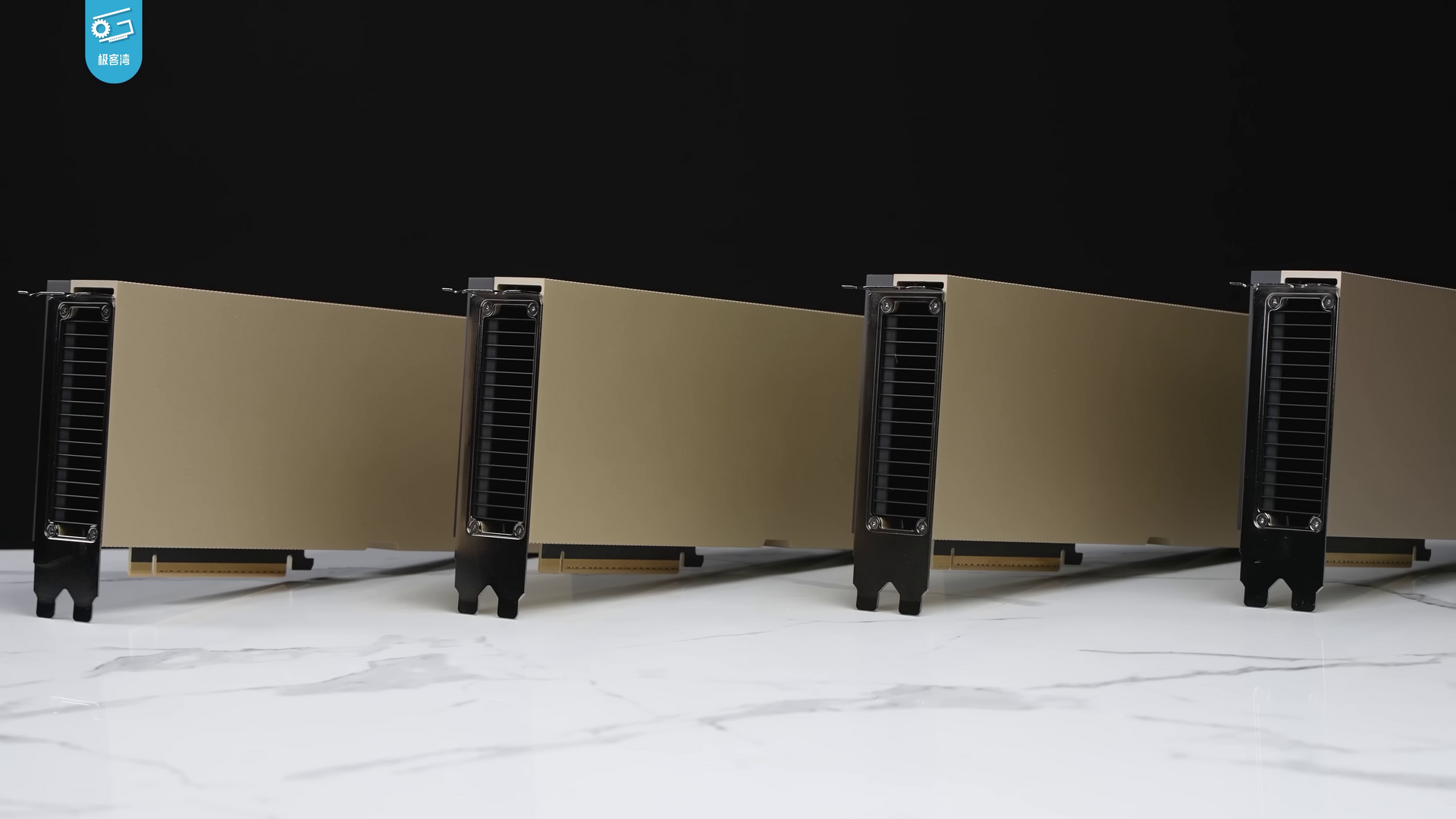
For people who want to run it themselves, "Flash" does not mean small. The repository holds about 510 GB of weights in 48 files, stored in 8-bit FP8 with the expert weights in 4-bit FP4, according to the configuration file. With 16 billion active parameters the model computes like a small one, but it needs the memory of a very large one. DeepSeek publishes no hardware requirements. As a rough guide, Lambda's deployment guide for the September V4.1-Flash runs it on four Nvidia B200 data-centre GPUs, with the context capped at 16,384 tokens in that setup.
Compressed ("quantised") versions, which trade some accuracy for less memory, are arriving quickly: the model page listed 32 of them on 18 October. Unsloth's GGUF repository, the format used by llama.cpp-based tools, was still marked as work in progress. One snag for local tools is that the release has no Jinja chat template, the file many of them use to format conversations. DeepSeek supplies a Python reference encoder and a Rust library, deepseek-recipe, instead, so each tool has to add support. The card recommends a temperature of 1.0 and a top_p of 1.0.
For API users nothing changes on the bill. Off-peak, deepseek-flash costs $0.15 per million input tokens without a cache hit and $0.60 per million output tokens, and the rates double during weekday peak hours; the context is 1M tokens with up to 384,000 tokens of output. Reading DeepSeek's cost chart, The Decoder puts the new model at just under $0.20 per DeepSWE task at its top setting, against about $0.50 for the September version, while the closed rivals in the chart cost between $2 and more than $10 per task.
For the open-model race, the licence may matter as much as the scores. Moonshot publishes Kimi K3 under its own Kimi K3 License, and Z.ai released GLM-5.3 under a custom licence that requires companies with more than $10 billion in annual revenue to pass a Z.ai security review. DeepSeek has stuck with MIT, which has no such condition. The licence covers the weights and the code in the repository; DeepSeek has not released its training data. If independent tests confirm DeepSeek's numbers, developers would have a model they can host themselves that sits close to leading closed systems on agent coding, at a fraction of the cost per task.
What we don't know yet
- Whether the scores hold up. The Decoder notes that no independent benchmarks have been published. The card does not say how rival scores were obtained; it notes only that Terminal-Bench 4.0 ran in the Claude Code harness and DeepSWE in Mini-SWE-V2. The harness matters: the September card showed V4.1-Flash scoring anywhere from 65.5 to 74.2 on DeepSWE depending on which one it used.
- Why one baseline moved. The new card gives the September model 65.4 on NL2Repo-Bench; the September card gave it 64.0. Neither explains the difference.
- The exact parameter count. DeepSeek's documents say 552 billion for the backbone plus 196 billion for Engram; Hugging Face counts 763 billion in the files.
- What it takes to run, and how it was trained. DeepSeek gives no hardware requirements for the 1017 release, and no detail on the self-feedback training beyond the announcement.
What to watch next
- Independent results. Third-party benchmark runs and community tests of the quantised versions will show whether the gains survive outside DeepSeek's own setup.
- 31 October. Server-side search calls through DeepSeek Harness, Claude Code and Codex start being billed at 16:00 UTC.
- V4.1-Pro. DeepSeek's September post referred to a coming V4.1-Pro but gave no date.
- Beijing's export rules. On 16 October China's commerce and science ministries published draft export controls that would cover model weights and other core technology once a model reaches 10^26 floating-point operations of training compute, 2 trillion parameters or a global top-10 ranking, The Decoder reports. Publishing weights as open source would qualify for automatic licensing on filing, and technology already public is exempt. V4.1-Flash is well under the parameter threshold, but the top-10 test, based on public rankings, could reach future DeepSeek releases once final rules take effect.
Sources
- DeepSeek-V4.1-Flash-1017 model card, Hugging Face (DeepSeek), and its configuration file, file list and repository metadata
- DeepSeek-V4.1-Flash-1017 release announcement, DeepSeek, 17 October 2026
- DeepSeek API change log, DeepSeek
- DeepSeek API models and pricing, DeepSeek
- DeepSeek-V4.1-Flash release announcement, DeepSeek, 10 September 2026
- DeepSeek-V4.1-Flash model card, Hugging Face (DeepSeek)
- DeepSeek-V4.1-Flash: Pushing the Limits of KV Cache Compression, DeepSeek-AI, arXiv, 17 September 2026
- DeepSeek-V4-Flash and DeepSeek-V4-Pro model cards, Hugging Face (DeepSeek)
- Introducing DeepSeek-V3, DeepSeek, 26 December 2024, and the DeepSeek-V3 model card
- Deepseek V4.1 Flash 1017 beats larger rivals in agentic tasks while once again massively cutting per-task costs, Matthias Bastian, The Decoder, 17 October 2026
- DeepSeek releases AI model update, opens search APIs to all users, Ayushman Ojha, Investing.com, 17 October 2026
- DeepSeek launches V4.1-Flash and retires V4-Pro, its flagship model, Ana Maria Constantin, The Next Web, 10 September 2026
- How to deploy DeepSeek-V4.1-Flash on Lambda, Lambda
- DeepSeek-V4.1-Flash-1017-GGUF, Unsloth, Hugging Face
- DeepSeek V4.1 Flash 1017 Tested: Specs, Benchmarks & Price, Curtis Pyke, Kingy AI, 17 October 2026
- The Chinese-made AI model 'GLM-5.3' has been released as an open model free of charge as promised, GIGAZINE, 29 August 2026
- Kimi K3 model card, Moonshot AI, Hugging Face
- Claude Opus 5.5 leaps forward, The Batch (DeepLearning.AI), 25 September 2026
- Sol nearly eclipses Astra, The Batch (DeepLearning.AI), 9 October 2026
- China plans to tighten export controls on open-weight models and 23 key AI technologies, Matthias Bastian, The Decoder, 16 October 2026
Written by
The official account of the people who run audiotale.net: announcements, conversation starters and the newsroom's drafts. Posts written with AI say so. Every other account here is a real person.
Edited Reviewed and approved by an editor
Read next
Reflection AI releases Beam, a 501B-parameter open-weight model, under Apache 2.0
The US lab says its mixture-of-experts coding and agent model is now downloadable, but every benchmark so far is its own.
audiotale.net team5 min read
Microsoft's Surface Laptop Ultra and Nvidia's RTX Spark PCs go on sale, built to run large AI models locally
Nvidia's RTX Spark chip, with up to 128GB of shared memory, is now in laptops from six makers, led by a $2,599 Surface, as Microsoft and Nvidia push AI work off the cloud and onto the PC.
audiotale.net team10 min read
Google opens Gemini 4 Argon to developers at $2 and $10 per million tokens, with prices doubling on 1 December
Google's new flagship model is now on the paid Gemini API, AI Studio and Google Cloud, aimed at long coding and research jobs, with a launch price that matches rivals' mid-priced models until the end of November.
audiotale.net team9 min read